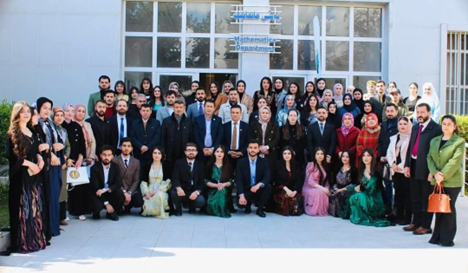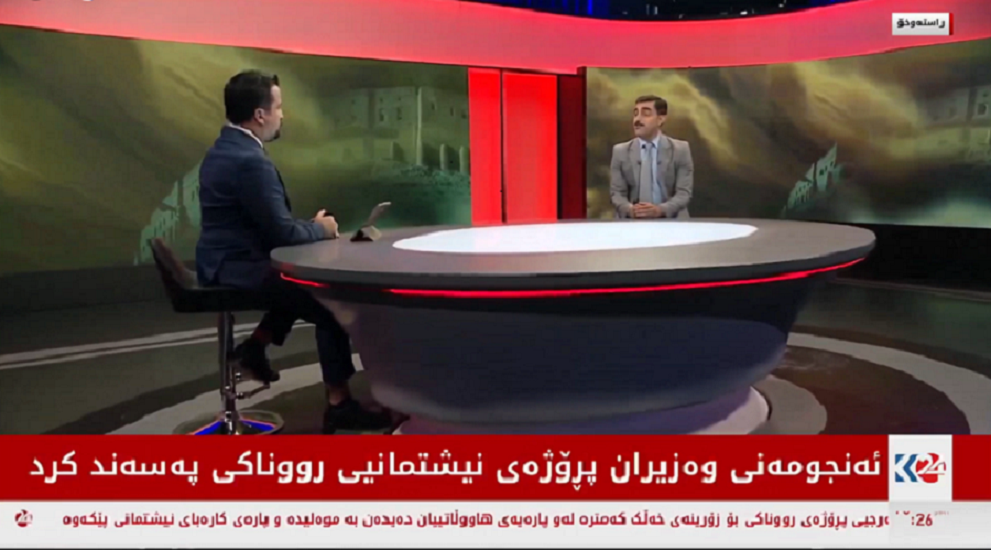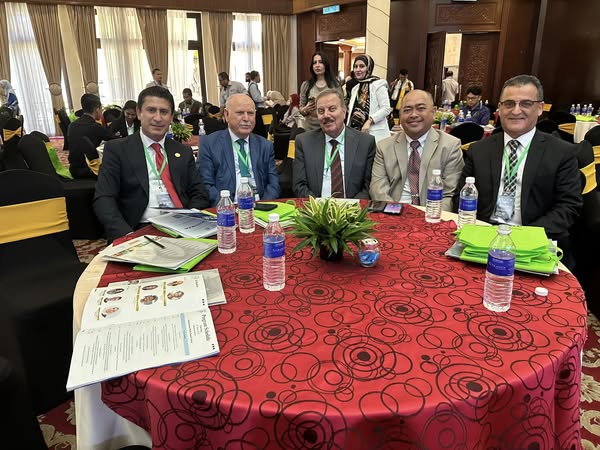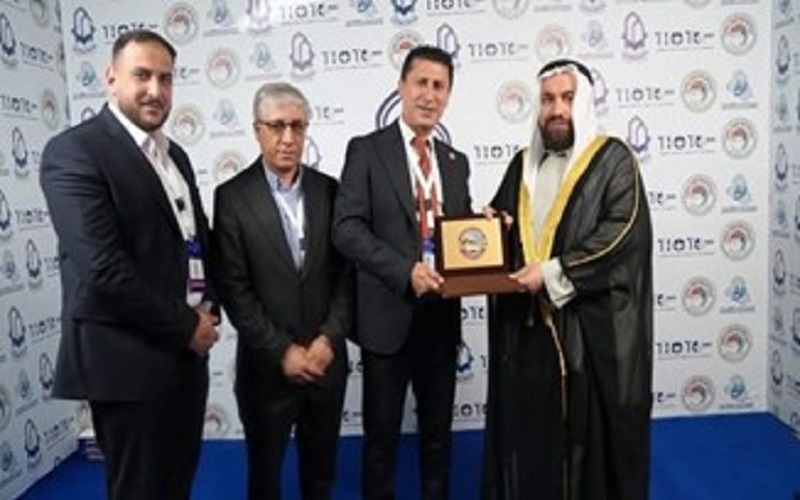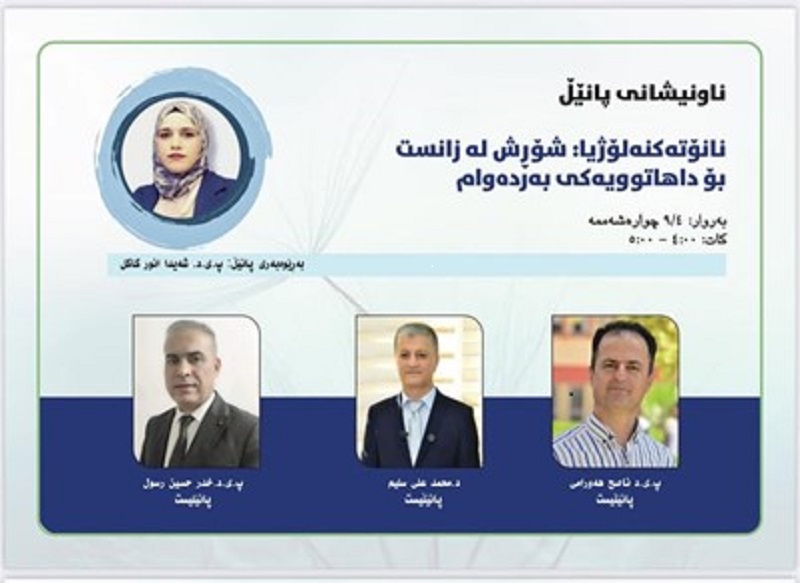
A valuable seminar was held in our department, presented by Dr. Nawroz Ismael Hassan, a lecturer from the Department of Physiotherapy at Erbil Technical Health and Medical College. The seminar focused on the following topics:
explores a dual approach to breast cancer treatment by combining photodynamic therapy (PDT) with drug delivery using biocompatible nanoparticles. It highlights the importance of understanding light-tissue interactions for accurate diagnostics and effective therapies. Using Monte Carlo simulations, researchers analyzed light dispersion in normal and cancerous breast tissues across near-infrared (NIR) wavelengths (800–1100 nm), revealing significant differences in diffuse reflectance and fluence rates based on tissue type and laser beam shape.
In the experimental phase, Kolliphore-elp35/Folic Acid-conjugated (KoliFA) polymeric nanoparticles were synthesized and loaded with paclitaxel (PTX) and indocyanine green (ICG). These nanoparticles demonstrated enhanced breast cancer targeting under NIR laser irradiation. Characterization showed that the nanoparticles grew in size from 390 nm to 1372 nm after drug loading, with a slight reduction in zeta potential.
In vitro tests on MCF-7 (cancer) and MCF-10A (normal) cells showed that the KoliFA-PTX-ICG formulation, combined with NIR laser, significantly reduced cancer cell viability and increased apoptosis (up to 70%) while sparing normal cells (60% viability maintained). Compared to PTX alone, the nanoparticle-laser therapy showed superior efficacy, indicating its potential for selective, effective chemo-photodynamic treatment of breast cancer.