
The Department of Physics at College of Science is a large dynamic teaching and research centre in the Kurdistan region. The Department of Physics is committed to high-quality undergraduate and postgraduate teaching and to good scientific research. It provides a friendly and exciting learning environment that helps to bring out the best of intellectual skills of our students .
Such a large dynamic department, currently, has around 70 permanent academic and research staff, around 10 postgraduate students, and around 350 undergraduate students. Each year around 80 young people join the department undergraduate courses. They receive a high-quality education in modern physics from academic staff that have good knowledge in the areas of current excitement in physics. The Department of Physics has a good reputation for its research activities, particularly in solid-state physics, material physics, and nuclear physics. Many of research from the Department have been considered as being internationally quality.
During the last few years, a new and modern building has been provided to Physics. Currently, it has been started to construct new study areas, teaching laboratories, a new and stylish library, and many other facilities.
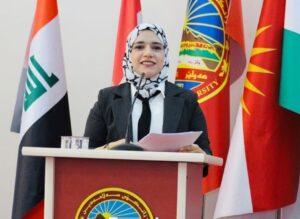 Asst. Prof. Dr. Shaida Anwer Kakil has been working as a lecturer of physics at University of Salahaddin-Erbil, College of Science, Department of Physics. She graduated from College of Science, University of Salahaddin-Erbil in 2011. She was then awarded MSc. Degree with the thesis entitled " Preparation and Investigation of Photodetectors based on ZnO Crystals Grown on Silicon and Porous Silicon Surfaces” from Physics Department, College of Science, Salahaddin University-Erbil in 2014. She then got appointed as an assistant lecturer at the same university. She was awarded PhD. Degree with the dissertation entitle "Investigation of Structure and Electronic Properties of N-Doped TiO2 Clusters" from Università degli Studi di Milano, Italy, in 2021.
Graduates from the Department of Physics will:
Key learning outcomes include:
- Demonstrate a solid understanding of fundamental physics concepts, including mechanics, thermodynamics, electromagnetism, quantum mechanics, and optics.
- Apply mathematical tools and theoretical models to solve physical problems.
- Understand advanced topics in modern physics, such as condensed matter, nuclear physics, and astrophysics.
- Develop critical thinking and problem-solving skills to analyze complex physical systems.
- Apply computational methods and software tools for data analysis and simulation.
- Design experiments, collect data, and interpret results with scientific rigor.Apply critical thinking and problem-solving abilities to plan and carry out experiments, evaluate data, and achieve meaningful findings.
- Establish competency in laboratory procedures and apply contemporary physics equipment and technology.
- Adopt ethical standards in scientific research and professional activity.
- Effectively communicate scientific information to a varied audience verbally and in writing.
- Pursue a job in hospitals, research institutions, industrials.
- Engage in lifelong learning and adapt to novel scientific and technological advances in the physics sciences.
These learning outcomes ensure that graduates from the Department of Environmental Sciences and Health are well equipped to address environmental challenges, protect human health and contribute to sustainable development through research, policy and community engagement.
Degree Program Overview
The Department of Biology provides undergraduate programs in biomedical sciences and general biology. These programs are intended to offer students a comprehensive biological and life sciences education, combining theoretical knowledge with extensive practical experience. Graduates can pursue advanced studies and meet the requirements of careers in academia, research, healthcare, biotechnology, and related fields.
General Biology Program
The general biology program provides in-depth knowledge of the fundamental principles of life sciences, with a special focus on molecular, cellular, organismal, and ecological biology, zoology, botany, microbiology, genetics, ecology, physiology, and biochemistry are among the varied subjects that students explore. The curriculum prioritizes the integration of theory and practice through research projects, field studies, and laboratory work. This program provides students with the necessary skills for exploring an extensive range of career opportunities, such as positions in environmental agencies, research institutions, education, and quality control laboratories.
Key features of the General Biology program include:- Core Courses in Zoology, Botany, Microbiology, Cell Biology, and Biochemistry.
- Elective courses allow students to specialize in specific areas of interest, such as toxic plants and tissue culture techniques.
- Research Project in the final year to develop scientific investigation and data analysis skills.
Biomedical Sciences Program
The Biomedical Sciences program highlights the adoption of biological principles into the fields of healthcare and medicine. It includes essential fields: molecular biology, microbiology, medical bacteriology, immunology, hematology, and clinical chemistry. This program provides students with the necessary skills and knowledge for future careers in medical laboratories, healthcare facilities, biotechnology firms, and research organizations. It also provides a strong basis for individuals pursuing clinical research, medicine, or advanced biomedical studies careers.
Key features of the Biomedical Sciences program include:- Core courses in medical bacteriology, genetics, molecular biology, immunology, and clinical laboratory techniques.
- Elective courses to explore specialized fields like histopathology, toxicology, and bioinformatics.
- Practical training in advanced laboratory techniques, diagnostic procedures, and biosafety protocols.
- Research Project in the final year to enhance analytical and problem-solving skills.
Program Structure
Both degree programs are four-year, full-time Bachelor of Science (B.Sc.) programs structured according to the European Credit Transfer and Accumulation System (ECTS). Each academic year is divided into two semesters, with students completing 30 ECTS credits per semester.
- Years 1 and 2 focus on foundational courses in biology, chemistry, and essential skills (e.g., computer skills and academic writing).
- Years 3 and 4 encompass electives, research projects, and specialized and advanced courses customized to each program.
Career Readiness and Development
The programs prioritize ethical practices in science, research skills, and practical experience. Students obtain advantages from:- Laboratory sessions that employ contemporary devices. • Opportunities for real-world experience through internships. • Academic advising and career services to facilitate employment or further education.
Postgraduate Studies
The Department of Biology at Salahaddin University-Erbil offers robust postgraduate programs to advance knowledge, foster research innovation, and develop specialized expertise in biological sciences.
Program Offerings
- Master of Science (M.Sc.) in Biology
- Molecular Biology
- Microbiology
- Physiology
- Zoology
- Botany
- Specialized Subfields
- Coursework (60 ECTS): Advanced topics in biology tailored to the student's area of specialization.
- Research Thesis (60 ECTS): An independent research project culminating in a thesis defense.
- Demonstrate advanced knowledge in their chosen field of biology.
- Design, conduct, and analyze biological research using appropriate methodologies.
- Communicate scientific findings effectively in written and oral formats.
- Apply critical thinking to address biological problems.
- Work independently and collaboratively in research settings.
- Doctor of Philosophy (Ph.D.) in Biology
- Advanced Coursework (30 ECTS): Topics tailored to support the research project.
- Research and Dissertation (150 ECTS): Original research culminating in a dissertation and defense.
- Conduct independent, original research that contributes to the body of knowledge in biology.
- Demonstrate expertise in a specialized area of biology.
- Publish research findings in peer-reviewed journals.
- Exhibit advanced problem-solving and critical-thinking skills.
- Lead research projects and mentor junior researchers.
- Bachelor’s degree in biology or a closely related field.
- Minimum academic performance by university regulations.
- Proficiency in English (demonstrated through tests like IELTS or TOEFL).
- Successful performance in the entrance exam and interview.
- Master’s degree in biology or a related discipline.
- Proven research experience, preferably with publications in scientific journals.
- Submission of a detailed research proposal aligned with the department’s expertise.
- Proficiency in English (demonstrated through tests like IELTS or TOEFL).
- Successful performance in the entrance exam and interview.
The M.Sc. program is designed to provide students with advanced theoretical knowledge and practical research skills in various biological disciplines. The program emphasizes coursework and research to prepare students for academic, industrial, or governmental careers in biology.
Focus Areas:ECTS Distribution:
The program is structured to include 120 ECTS over two academic years:
Learning Outcomes:
Graduates of the M.Sc. program will:
The Ph.D. program focuses on original research contributions to the field of biology, aiming to develop experts capable of advancing biological sciences through innovative and impactful research.
Specialization Areas:Students work closely with faculty mentors to focus on a specific research area within biology, such as genetics, ecology, or biochemistry.
ECTS Distribution:The Ph.D. program requires 180 ECTS, typically completed over three to four years:
Graduates of the Ph.D. program will:
The department has modern laboratories, research tools, and computational resources to support postgraduate students’ academic journeys. Collaborative opportunities with national and international institutions are also available, encouraging interdisciplinary research and innovation.
The postgraduate programs are designed to empower students to become leaders in their respective fields, whether in academia, industry, or public service and contribute meaningfully to advancing biological sciences.
Program learning outcome
Graduates from the Department of Biology at Salahaddin University-Erbil will achieve the following learning outcomes upon successful completion of the General Biology or Biomedical Science programs:
- Comprehensive Knowledge Demonstrate extensive understanding of core biological concepts, including molecular biology, genetics, physiology, microbiology, botany, and zoology. This includes knowledge of living organisms’ structure, function, and interactions at molecular, cellular, organismal, and ecological levels.
- Critical Thinking and Problem-Solving Apply critical thinking skills and scientific reasoning to design experiments, collect and analyze data, and interpret findings. Graduates will be capable of solving biological problems and contributing to new scientific discoveries.
- Laboratory and Technical Proficiency Establish competency in laboratory procedures, including using contemporary biological instruments and technologies. This includes techniques in microbiology, molecular biology, genetics, histology, and biochemistry, ensuring readiness for research and professional practice.
- Ethical and Professional Conduct Uphold ethical standards and integrity in scientific research, laboratory work, and professional activities. Graduates will understand biosafety and biosecurity principles and apply them responsibly.
- Effective Communication Effectively communicate scientific information, findings, and concepts to diverse audiences through verbal presentations, scientific writing, and visual data representation. This includes writing research reports and presenting findings in professional settings.
- Career Readiness Pursue careers in medical laboratories, research institutions, pharmaceutical companies, quality control centers, and educational settings. Graduates will be equipped to contribute to disease diagnosis, prevention, treatment, and public health promotion.
- Lifelong Learning and Adaptability Engage in lifelong learning to stay current with advances in biological sciences and emerging technologies. Graduates will demonstrate adaptability to new scientific methods and concepts, fostering continuous professional development.
- Research Skills Conduct independent research and contribute to scientific progress by formulating hypotheses, conducting experiments, and analyzing results. Graduates will be prepared to pursue advanced studies or research-focused careers.
By achieving these outcomes, graduates from the Department of Biology will be well-prepared to address biological and health-related challenges, advance scientific knowledge, and serve their communities effectively.
The General Biology and Biomedical Science programs of the Department of Biology provide extensive courses. Each course is constructed to provide students with practical skills and a comprehensive understanding of various biological disciplines. Following is an in-depth list of the courses that are available in both programs:
- SBG101 – Zoology I (9 ECTS) Study of animal classification, morphology, and physiology with lab practices.
- SBG102 – Botany I (6 ECTS) Introduction to plant structure, growth, and function with practical sessions.
- SBG103 – Organic Chemistry (6 ECTS) Fundamentals of organic molecules and reactions relevant to biological systems.
- SU1001 – Computer Skills (3 ECTS) Basic computer applications and software tools for academic purposes.
- SU1003 – Kurdish Studies (3 ECTS) Study of Kurdish history, culture, and language.
- SU1004 – English for University Students (3 ECTS) Development of academic English skills.
- SBG201 – Zoology II (6 ECTS) Continuation of animal classification and physiology with emphasis on diversity.
- SBG202 – Botany II (6 ECTS) Advanced concepts in plant physiology and taxonomy.
- SBG203 – Analytical Chemistry (6 ECTS) Techniques for analyzing biological samples and chemical compounds.
- SBG204 – Biosafety and Biosecurity (3 ECTS) Safety practices in biological research and laboratory settings.
- SU1002 – Academic Skills (6 ECTS) Academic writing, critical reading, and research skills.
- SU1005 – English for Specific Purposes (3 ECTS) Discipline-specific English terminology and communication skills.
- SBG301 – Microbiology I (Core) (6 ECTS) Introduction to microorganisms and their roles in health and environment.
- SBG302 – Biochemistry I (Core) (6 ECTS) Study of biomolecules and metabolic pathways.
- SBG303 – Cell Biology (Core) (6 ECTS) Structure and function of cells, organelles, and cellular processes.
- SBG304 – Plant Anatomy (Core) (6 ECTS) Study of plant tissues and their organization.
- SBG305 – Invertebrates or Venomous Invertebrates (Elective 1) (3 ECTS) Exploration of invertebrate diversity and venomous species.
- SBG306 – Algae or Phycology (Elective 2) (3 ECTS) Study of algae types, ecology, and applications.
- SBG401 – Microbiology II (Core) (6 ECTS) Advanced study of microorganisms and infectious diseases.
- SBG402 – Biochemistry II (Core) (6 ECTS) Continuation of metabolic processes and biochemical analysis.
- SBG403 – Parasitology (Core) (6 ECTS) Study of parasites affecting humans and animals.
- SBG404 – Plant Taxonomy (Core) (6 ECTS) Classification and identification of plant species.
- SBG405 – Microtechniques or Tissue Culture Technique (Elective 1) (3 ECTS) Laboratory methods for preparing and studying biological samples.
- SBG406 – Archegoniate or Toxic Plants (Elective 2) (3 ECTS) Study of higher plants or toxic plant species.
- SBG501 – Histology (3 Units) Study of tissues and microscopic anatomy.
- SBG502 – Entomology (3 Units) Study of insects, their classification, and ecological roles.
- SBG503 – Animal Physiology I (3 Units) Functions of animal organ systems.
- SBG504 – Ecology (3 Units) Interactions between organisms and their environment.
- SBG505 – Virology (3 Units) Study of viruses and their impact on living organisms.
- SBG506 – Epidemiology (Elective) (3 Units) Patterns and control of diseases in populations.
- SBG601 – Embryology (3 Units) Development of embryos and early life stages.
- SBG602 – Animal Physiology II (3 Units) Continuation of animal physiology, focusing on advanced topics.
- SBG603 – Mycology (3 Units) Study of fungi, including taxonomy and pathology.
- SBG604 – Molecular Biology (3 Units) Genetic mechanisms and molecular processes.
- SBG605 – Microbial Physiology (3 Units) Study of microbial growth and metabolism.
- SBG606 – Pollution (Elective) (3 Units) Environmental pollution and its biological impact.
- SBG701 – Food Microbiology (3 Units) Microorganisms in food production and safety.
- SBG702 – Medical Bacteriology I (3 Units) Pathogenic bacteria and disease mechanisms.
- SBG703 – Hematology (3 Units) Study of blood cells and disorders.
- SBG704 – Genetics (3 Units) Principles of inheritance and genetic variation.
- SBG705 – Comparative Anatomy (3 Units) Comparative study of vertebrate anatomy.
- SBG706 – Diagnostic Parasitology (Elective) (3 Units) Techniques for diagnosing parasitic infections.
- SBG707 – Research Project (2 Units) Independent research under faculty supervision.
- SBG801 – Plant Physiology (3 Units) Processes in plant growth and function.
- SBG802 – Medical Bacteriology II (3 Units) Continuation of bacterial diseases and diagnostics.
- SBG803 – Immunology (3 Units) The immune system and its functions.
- SBG804 – Microbial Genetics (3 Units) Genetics of microorganisms and genetic engineering.
- SBG805 – Industrial Microbiology (3 Units) Microbial applications in industry.
- SBG806 – Bioinformatics (Elective) (3 Units) Analysis of biological data using computational tools.
- SBG807 – Research Project (2 Units) Completion and presentation of research findings.
- SBM101 – Zoology I (9 ECTS) Introduction to animal biology, focusing on classification, anatomy, physiology, and behavior of invertebrates and vertebrates. Hours/Week: 2 Theory, 2 Practical
- SBM102 – Botany I (6 ECTS) Fundamental concepts in plant biology, including morphology, physiology, and taxonomy. Hours/Week: 2 Theory, 2 Practical
- SBM103 – Organic Chemistry (6 ECTS) Basics of organic compounds, including structure, reactions, and mechanisms relevant to biological systems. Hours/Week: 2 Theory, 2 Practical
- SU1001 – Computer Skills (3 ECTS) Introduction to essential computer applications, data management, and scientific software. Hours/Week: 1 Theory, 2 Practical
- SU1003 – Kurdish Studies (3 ECTS) An overview of Kurdish history, language, and culture. Hours/Week: 2 Theory
- SU1004 – English for University Students (3 ECTS) Basic English language skills for academic purposes. Hours/Week: 2 Theory
- SBM201 – Zoology II (6 ECTS) Advanced study of animal diversity, focusing on the physiology and development of various animal groups. Hours/Week: 2 Theory, 2 Practical
- SBM202 – Botany II (6 ECTS) Continuation of Botany I, covering plant reproduction, growth, and ecological interactions. Hours/Week: 2 Theory, 2 Practical
- SBM203 – Analytical Chemistry (6 ECTS) Principles of chemical analysis, including qualitative and quantitative techniques. Hours/Week: 2 Theory, 2 Practical
- SBM204 – Biosafety and Biosecurity (3 ECTS) Fundamentals of laboratory safety, handling biological materials, and risk management. Hours/Week: 2 Theory
- SU1002 – Academic Skills (6 ECTS) Development of research, writing, and presentation skills for academic success. Hours/Week: 2 Theory, 2 Practical
- SU1005 – English for Specific Purposes (3 ECTS) Specialized English for scientific and biomedical contexts. Hours/Week: 2 Theory
- SBM301 – Microbiology I (Core) (6 ECTS) Introduction to microorganisms, including bacteria, viruses, fungi, and their roles in health and disease. Hours/Week: 2 Theory, 2 Practical
- SBM302 – Biochemistry I (Core) (6 ECTS) Structure and function of biomolecules, including proteins, lipids, carbohydrates, and nucleic acids. Hours/Week: 2 Theory, 2 Practical
- SBM303 – Cell Biology (Core) (6 ECTS) Study of cellular structure, function, and processes such as signaling and division. Hours/Week: 2 Theory, 2 Practical
- SBM304 – Medical Protozoology (Core) (6 ECTS) Study of medically significant protozoa, their life cycles, and pathogenicity. Hours/Week: 2 Theory, 2 Practical
- SBM305 – Histology or Histopathology (Elective 1) (3 ECTS) Option 1: Histology – Study of normal tissues and their microscopic structure. Option 2: Histopathology – Study of tissue abnormalities and disease pathology. Hours/Week: 2 Theory, 2 Practical
- SBM306 – Human Anatomy or Anatomy of Laboratory Animals (Elective 2) (3 ECTS) Option 1: Human Anatomy – Overview of human body systems and structures. Option 2: Anatomy of Laboratory Animals – Comparative anatomy relevant to research models. Hours/Week: 2 Theory, 2 Practical
- SBM401 – Microbiology II (Core) (6 ECTS) Advanced topics in microbial physiology, genetics, and host-pathogen interactions. Hours/Week: 2 Theory, 2 Practical
- SBM402 – Biochemistry II (Core) (6 ECTS) Metabolic pathways, enzymology, and biochemical regulation mechanisms. Hours/Week: 2 Theory, 2 Practical
- SBM403 – Genetics (Core) (6 ECTS) Principles of inheritance, gene expression, and genetic variation. Hours/Week: 2 Theory, 2 Practical
- SBM404 – Medical Helminthology (Core) (6 ECTS) Study of parasitic worms, their life cycles, and diseases they cause. Hours/Week: 2 Theory, 2 Practical
- SBM405 – Human Embryology or Developmental Biology (Elective 1) (3 ECTS) Option 1: Human Embryology – Study of human development from fertilization to birth. Option 2: Developmental Biology – Mechanisms of growth and differentiation in organisms. Hours/Week: 2 Theory, 2 Practical
- SBM406 – Medical Physics or Biophysics (Elective 2) (3 ECTS) Option 1: Medical Physics – Physical principles applied to medical diagnostics and treatment. Option 2: Biophysics – Study of biological processes using physical methods. Hours/Week: 2 Theory, 2 Practical
- SBM501 – Molecular Biology I Units: 3 | Hours/Week: 2 Theory, 2 Practical This course covers the fundamental principles of molecular biology, including DNA structure, replication, transcription, translation, and gene regulation. Laboratory sessions focus on techniques such as DNA extraction, PCR, and gel electrophoresis.
- SBM502 – Hematology I Units: 3 | Hours/Week: 2 Theory, 2 Practical Introduction to blood cell physiology, hematopoiesis, and the morphology of blood components. Practical work includes blood smear preparation, staining, and analysis of normal and abnormal cells.
- SBM503 – Basics Immunology Units: 3 | Hours/Week: 2 Theory, 2 Practical This course covers the immune system's components and functions, including innate and adaptive immunity, antigens, antibodies, and immune responses. Laboratory activities include serological tests and immunological assays.
- SBM504 – Medical Mycology Units: 3 | Hours/Week: 2 Theory, 2 Practical Study of medically significant fungi, including their identification, pathogenicity, and treatment. Practical work involves culturing and identifying fungal species associated with human disease.
- SBM505 – Basics Physiology Units: 3 | Hours/Week: 2 Theory, 2 Practical Introduction to human physiological processes, including homeostasis, nervous, and major organ systems. Laboratory exercises focus on measuring physiological parameters.
- SBM506 – Pharmacology (Elective) Units: 3 | Hours/Week: 3 Theory Covers the principles of pharmacodynamics and pharmacokinetics, drug classifications, mechanisms of action, and therapeutic uses.
- SBM601 – Molecular Biology II Units: 3 | Hours/Week: 2 Theory, 2 Practical Advanced molecular biology topics include gene expression regulation, epigenetics, and recombinant DNA technology. Practical sessions involve cloning and gene expression analysis.
- SBM602 – Hematology II Units: 3 | Hours/Week: 2 Theory, 2 Practical Continuation of Hematology I, covering hematological disorders, anemia, leukemias, and coagulation pathways. Practical work includes diagnostic techniques for blood disorders.
- SBM603 – Medical Immunology Units: 3 | Hours/Week: 2 Theory, 2 Practical Focus on immune system dysfunctions, autoimmune diseases, immunodeficiencies, and immunotherapy. Laboratory sessions involve advanced immunological assays.
- SBM604 – Medical Virology Units: 3 | Hours/Week: 2 Theory, 2 Practical Study of viruses affecting humans, including their structure, replication, pathogenesis, and laboratory diagnosis. Practical work includes virus culture techniques and diagnostic assays.
- SBM605 – Medical Physiology Units: 3 | Hours/Week: 2 Theory, 2 Practical In-depth study of human organ systems, focusing on disease-related physiological changes. Laboratory work includes physiological measurements and functional assessments.
- SBM606 – Microtechnique (Elective) Units: 3 | Hours/Week: 2 Theory, 2 Practical Introduction to tissue preparation techniques, including fixation, embedding, sectioning, and staining. Practical sessions involve histological slide preparation and microscopic analysis.
- SBM701 – Medical Bacteriology I Units: 3 | Hours/Week: 2 Theory, 2 Practical Study of pathogenic bacteria, their identification, and clinical significance. Laboratory work includes culturing, staining, and antibiotic susceptibility testing.
- SBM702 – Biotechnology Units: 3 | Hours/Week: 2 Theory, 2 Practical Covers the applications of biotechnology in medicine, agriculture, and industry. Practical sessions focus on DNA cloning, genetic engineering, and biotechnological techniques.
- SBM703 – Clinical Chemistry Units: 3 | Hours/Week: 2 Theory, 2 Practical Principles and methods for analyzing body fluids for diagnostic purposes. Laboratory work includes assays for glucose, cholesterol, liver enzymes, and electrolytes.
- SBM704 – Instrumental Analysis Units: 3 | Hours/Week: 2 Theory, 2 Practical Study of analytical instruments used in biomedical laboratories, such as spectrophotometers, chromatographs, and electrophoresis units. Practical sessions focus on instrument operation and data interpretation.
- SBM705 – Toxicology Units: 3 | Hours/Week: 2 Theory, 2 Practical Introduction to the principles of toxicology, including mechanisms of toxicity, poison detection, and treatment. Laboratory work includes toxin analysis in biological samples.
- SBM706 – Bioinformatics (Elective) Units: 3 | Hours/Week: 3 Theory Covers computational tools for analyzing biological data, such as DNA sequences and protein structures. Practical sessions involve using bioinformatics software for sequence analysis.
- SBM707 – Research Project Units: 2 | Hours/Week: 1 Theory, 2 Practical Students undertake an independent research project, including experimental design, data collection, analysis, and presentation of results.
- SBM801 – Medical Bacteriology II Units: 3 | Hours/Week: 2 Theory, 2 Practical Advanced study of bacterial infections, their clinical manifestations, and diagnostic techniques. Practical work focuses on identifying clinical isolates.
- SBM802 – Endocrinology Units: 3 | Hours/Week: 2 Theory, 2 Practical Study of the endocrine system, hormone functions, and disorders. Laboratory sessions include hormone assays and diagnostic techniques.
- SBM803 – Clinical Laboratory Techniques Units: 3 | Hours/Week: 2 Theory, 2 Practical Covers essential diagnostic techniques in clinical laboratories, including hematological, biochemical, and microbiological assays.
- SBM804 – Cytogenetics Units: 3 | Hours/Week: 2 Theory, 2 Practical Study of chromosome structure, function, and abnormalities. Practical work includes karyotyping and chromosome analysis techniques.
- SBM805 – Epidemiology Units: 3 | Hours/Week: 3 Theory Introduction to disease distribution, determinants, and prevention strategies. Focus on public health practices and data interpretation.
- SBM806 – Food Microbiology (Elective) Units: 3 | Hours/Week: 2 Theory, 2 Practical Study of microorganisms in food, food spoilage, and safety. Laboratory work includes food sample analysis and contamination detection.
- SBM807 – Research Project Units: 2 | Hours/Week: 2 Practical Continuation and completion of the independent research project, culminating in a written thesis and oral presentation.
Admissions
The Department of Biology offers two types of study options for prospective students, ensuring accessibility and flexibility based on individual circumstances:
- Zankoline (government-funded) Study
- Description: This option provides free tuition for students who meet the eligibility criteria and are accepted through the general centralized admission system, known as "Zancoline."
- Eligibility:
- Applicants must meet the academic requirements of the Ministry of Higher Education and Scientific Research.
- Selection is competitive and based on high school scores, particularly in scientific subjects.
- Benefits:
- Exemption from tuition fees.
- Access to complete university services and facilities.
- Parallel Study (Self-Funded)
- Description: This option allows students who do not secure a Zankoline seat to pursue their studies by paying a tuition fee.
- Tuition Fee: 3,000,000 IQD per year.
- Eligibility:
- Students must meet the minimum academic requirements for admission to the Biology program.
- This option provides additional opportunities for students to catch up on the Zankoline criteria.
- Benefits:
- Access to the same high-quality education, resources, and facilities as Zancoline students.
- Students can pursue their academic goals without being limited by centralized admission quotas.
Admission Requirements for Both Tracks
- Academic Qualifications:
- Completion of high school with a focus on the science track (biology, chemistry, and physics).
- Minimum GPA as determined by the Ministry of Higher Education.
- Application Process:
- Apply through the centralized admission system for Zankoline
- Submit required documents, including transcripts, identification, and certificates.
- Language Proficiency:
- Basic proficiency in English, as several courses are delivered in English.
- Kurdish language proficiency is also beneficial.
Graduate Employability
The Department of Biology is committed to equipping graduates at all levels, “Bachelor’s, Master’s, and Doctorate,” with the knowledge, skills, and experiences necessary to thrive in diverse career paths. Our graduates are well-prepared for opportunities in academia, industry, government, and beyond, with a focus on contributing to scientific advancement and societal development.
- Bachelor of Science (B.Sc.) in Biology
- Medical and Diagnostic Laboratories: Assisting in disease diagnosis, treatment monitoring, and health promotion.
- Biotechnology and Pharmaceutical Companies: Roles in research, quality control, and production.
- Environmental and Conservation Organizations: Contributing to biodiversity, ecological management, and sustainability projects.
- Quality Control and Food Safety: Ensuring compliance with safety standards in food production and industrial processes.
- Education: Teaching biology at secondary schools or training centers.
- Government and NGOs: Roles in health departments, environmental agencies, or research initiatives.
- Laboratory competency with modern techniques and tools.
- Analytical and problem-solving abilities for addressing biological challenges.
- Effective communication for scientific and public engagement.
- Master of Science (M.Sc.) in Biology
- Research Institutions: Conducting applied or fundamental research in biology.
- Biotechnology and Pharmaceutical Industries: Leading roles in research and development, drug discovery, and genetic engineering.
- Higher Education: Teaching at universities or supervising undergraduate research.
- Clinical and Diagnostic Laboratories: Developing and applying advanced diagnostic tools and techniques.
- Environmental Agencies: Leading conservation projects or conducting environmental impact assessments.
- Science Communication: Working in scientific publishing, journalism, or outreach programs.
- Advanced problem-solving and critical-thinking skills.
- Proficiency in designing, conducting, and analyzing research.
- Ability to lead projects and collaborate across disciplines.
- Doctor of Philosophy (Ph.D.) in Biology
- Academia: Professorships, research supervision, and curriculum development.
- Industry Leadership: Roles as senior scientists or directors in biotech, pharmaceutical, and biomedical companies.
- Government and Policy: Shaping health, environment, and education policies.
- Research Institutions: Leading cutting-edge research projects with significant societal impact.
- Global Organizations: Contributing to international health, conservation, or scientific initiatives (e.g., WHO, UNESCO).
- Entrepreneurship: Founding biotech startups or consulting firms.
- Mastery of specialized research techniques and methodologies.
- Ability to publish high-impact scientific findings.
- Leadership in interdisciplinary and collaborative projects.
- Strategic thinking for problem-solving at organizational and societal levels.
Graduates of the B.Sc. program possess foundational knowledge and practical skills that open doors to a variety of career opportunities:
Career Paths:M.Sc. graduates are highly sought after for specialized roles requiring advanced expertise and research experience:
Career Paths:Ph.D. graduates are distinguished by their expertise, critical thinking, and capacity for innovation. They are well-prepared to take on academia, research, and industry leadership roles.
Career Paths:- Abbas, K.A. & Ibrahim, H.S., 2023. Fitting of rainfall data in Erbil City using statistical distribution techniques. ZANCO Journal of Pure and Applied Sciences, 35(6), pp.9–15. DOI: http://dx.doi.org/10.21271/ZJPAS.35.6.2.
- Abbas, T. & Slewa, L., 2015. Transmission line method (TLM) measurement of (metal/ZnS) contact resistance. International Journal of Nanoelectronics and Materials, 8, pp.111–120.
- Abbas, T. & Slewa, L., 2015. Transmission line method (TLM) measurement of (metal/ZnS) contact resistance. International Journal of Nanoelectronics and Materials, 8, pp.111–120.
- Abbas, T.A.H., Kakil, S.A. & Slewa, L.H., 2017. Comparative study between sensing properties of single layer (NiO) and heterojunction (NiO/p-Si) gas sensors based on nanostructured NiO films by spray pyrolysis. Journal of Materials Science: Materials in Electronics, 28(21), pp.16086–16093.
- Abbas, T.A.H., Kakil, S.A. & Slewa, L.H., 2017. Comparative study between sensing properties of single layer (NiO) and heterojunction (NiO/p-Si) gas sensors based on nanostructured NiO films by spray pyrolysis. Journal of Materials Science: Materials in Electronics, 28(21), pp.16086–16093.
- Abbas, T.A.H., Slewa, L.H., Khizir, H.A. & Kakil, S.A., 2017. Synthesis of cobalt oxide (Co₃O₄) thin films by electrostatic spray pyrolysis technique (ESP). Journal of Materials Science: Materials in Electronics, 28, pp.1951–1957.
- Abbas, T.A.H., Slewa, L.H., Khizir, H.A. & Kakil, S.A., 2017. Synthesis of cobalt oxide (Co₃O₄) thin films by electrostatic spray pyrolysis technique (ESP). Journal of Materials Science: Materials in Electronics, 28(2), pp.1951–1957.
- Abbas, T.A.H., Slewa, L.H., Khizir, H.A. & Kakil, S.A., 2017. Synthesis of cobalt oxide (Co₃O₄) thin films by electrostatic spray pyrolysis technique (ESP). Journal of Materials Science: Materials in Electronics, 28, pp.1951–1957.
- Abdulgafar, S.A., Ibrahem, M.A. & Slewa, L.H., 2025. Comparative fabrication and performance of metal-semiconductor-metal and heterojunction near-infrared photodetectors using Ag-modified porous silicon. Micro and Nanostructures, 202, p.208130.
- Abdulgafar, S.A., Ibrahem, M.A. & Slewa, L.H., 2025. Comparative fabrication and performance of metal-semiconductor-metal and heterojunction near-infrared photodetectors using Ag-modified porous silicon. Micro and Nanostructures, 202, p.208130.
- Abdulla, H.M. & Ahmed, A.H., 2022. Assessment of radiological hazards in cooking liquid oil, used in Kurdistan region-Iraq. Zanco Journal of Pure and Applied Sciences, 34(1), pp.1–7.
- Abdullah, B.J. and Abdullah, N.R., 2024. Exploring the electronic, dynamic, thermal and optical properties of novel XS (X= Be, Mg, Ca and Sr) monolayer: A first-principles study. Chemical Physics Letters, 856, p.141613.
- Abdullah, B.J. and Omar, M.S., 2018. Band structure calculations using density functional theory within LDA, GGA and HSE06 for zinc telluride. International Conference of Natural Science, 2, pp.184–189.
- Abdullah, B.J. and Omar, M.S., 2019. Calculation of the band structure for GaAs and ZnTe nanoparticles from the density functional theory based on LDA, GGA and HSE06. Eurasian Journal of Science & Engineering, 4(3), pp.31–39.
- Abdullah, B.J., 2010. Effect of size on lattice thermal conductivity in Si and Ge nanowires from 2K to room temperatures. Physics of Aerodisperse Systems, 46, pp.67–80.
- Abdullah, B.J., 2021. Diameter dependence of band gap of single-walled boron nitride nanotubes. Physics of the Solid State, 63(7), pp.1126–1130.
- Abdullah, B.J., 2022. Size effect of band gap in semiconductor nanocrystals and nanostructures from density functional theory within HSE06. Materials Science in Semiconductor Processing, 137, p.106214.
- Abdullah, B.J., 2024. Thermoelectric properties of BeO and MgO monolayers from first-principles calculations. Journal of Engineering Thermophysics, 33(1), pp.186–199.
- Abdullah, B.J., Azeez, Y.H. and Abdullah, N.R., 2023. A first-principles study on electronic structure, optical and thermal properties of BeX (X= C, N and O) monolayers. Solid State Communications, 361, p.115080.
- Abdullah, B.J., Jiang, Q. and Omar, M.S., 2016. Effects of size on mass density and its influence on mechanical and thermal properties of ZrO₂ nanoparticles in different structures. Bulletin of Materials Science, 39(5), pp.1295–1302. (Note: Same entry appears in 2018. Please confirm if duplicate or republication.)
- Abdullah, B.J., Jiang, Q. and Omar, M.S., 2018. Effects of size on mass density and its influence on mechanical and thermal properties of ZrO₂ nanoparticles in different structures. Bulletin of Materials Science, 39(5), pp.1295–1302.
- Abdullah, B.J., Omar, M.S. and Jiang, Q., 2018. Size dependence of the bulk modulus of Si nanocrystals. Sādhanā, 43(11), pp.1–5.
- Abdullah, B.J., Omar, M.S. and Jiang, Q., 2018. Size effects on cohesive energy, Debye temperature and lattice heat capacity from first-principles calculations of Sn nanoparticles. Proceedings of the National Academy of Sciences, India Section A: Physical Sciences.
- Abdullah, B.J., Omar, M.S. and Jiang, Q.J., 2016. Grüneisen parameter and its related thermodynamic parameters dependence on size of Si nanoparticles. ZANCO Journal of Pure and Applied Sciences, 28(4), pp.126–132.
- Abdullah, B.J., Omar, M.S., Saadi, N.S. and Jiang, Q., 2015. First-principles calculations on cohesive energy of bulk and nano Si. International Journal of Scientific & Engineering Research, 6(9), pp.842–846.
- Abdullah, D.M. & Omar, M., 2024. The role of grain boundary and alloy scattering within the Callaway model to calculate lattice thermal conductivity in GaN/AlN superlattice. Physica B: Condensed Matter, 695, p.416530.
- Abdullah, D.M. & Omar, M.S., 2024. Hydrostatic pressure effect on lattice thermal conductivity of wurtzite GaN semiconductor. Bulletin of Materials Science, 47(2).
- Abdullah, D.M. & Omar, M.S., 2024. Size and pressure dependence lattice thermal conductivity of Wurtzite GaN nanowires. Solid State Communications, 377, p.115379.
- Abdullah, H.M. & Ahmed, A.H., 2022. Assessment of radiological hazards in cooking liquid oil used in Kurdistan region-Iraq. ZANCO Journal of Pure and Applied Sciences, 34(1), pp.1–7.
- Abdullah, H.M. & Ahmed, A.H., 2022. Empirical formulae for (n, p) reaction cross-sections at 14–15 MeV neutrons. International Journal of Modern Physics E, 31(05), p.2250049.
- Abdullah, H.M. & Ahmed, A.H., 2022. Semi-empirical formula for (n, α) reaction cross sections at 14–15 MeV neutrons. Applied Radiation and Isotopes, 189, p.110396.
- Abdullah, H.M. & Ahmed, A.H., 2023. Empirical formula for (n, f) reaction cross sections of Uranium isotopes at 1–20 MeV neutrons. Applied Radiation and Isotopes, 202, p.111043.
- Abdullah, H.M. & Ahmed, A.H., 2023. Empirical systematics for (n, p) reaction cross sections at 14–15 MeV neutrons. Indian Journal of Physics, 97(1), pp.213–224.
- Abdullah, H.M. & Ahmed, A.H., 2023. Study on (n, p) reactions of 58Ni, 99Tc, 99Ru, 131Xe, 133Cs and 186Os radioisotopes used in medicine. Nuclear Engineering and Technology, 55(1), pp.304–309.
- Abdullah, H.M. & Ahmed, A.H., 2023. Study on (n, α) reactions for the production of 51Cr, 89Sr, 99Tc, 131I, 133Xe, 137Cs and 153Sm radioisotopes used in nuclear medicine. Nuclear Engineering and Technology, 55(9), pp.3352–3358.
- Abdullah, H.M. & Ahmed, A.H., 2024. An investigation of the (n, α) reaction cross sections using an empirical formula. Indian Journal of Physics, 98(14), pp.4883–4897.
- Abdullah, H.M., 2025. New empirical formulae for (n, 2n) reaction cross sections in the energy ranges 14–15 MeV. Indian Journal of Physics, pp.1–14.
- Abdullah, H.M., 2025. Study on empirical formulae for (n, f) reaction cross sections of thorium isotopes between 1 and 20 MeV. Radiochimica Acta, 113(5), pp.353–359.
- Abdullah, H.M., Jafir, A.O. & Gozeh, B.A., 2025. Study on (p, n) reactions for the production of iodine isotopes used in nuclear medicine at 1–20 MeV protons. Modern Physics Letters A, 2450200.
- Abdullah, H.M., Jafir, A.O. & Gozeh, B.A., 2025. Study on (p, n) reactions for the production of iodine isotopes used in nuclear medicine at 1–20 MeV protons. Modern Physics Letters A, p.2450200.
- Abdullah, I., Macdonald, J.E., Lin, Y.H., Anthopoulos, T.D., Salah, N.H., Kakil, S.A. et al., 2020. Bias stability of solution-processed In₂O₃ thin film transistors. Journal of Physics: Materials, 4(1), p.015003.
- Abdullah, N.R. and Azeez, Y.H., 2024. First-principles investigation of the thermal properties of XO (X= Be, Mg and Sr) nanosheet. International Journal of Modern Physics B.
- Abdullah, N.R., Abdullah, B.J. and Azeez, Y.H., 2023. Exploring electronic, optical, and phononic properties of MgX (X = C, N, and O) monolayers using first principle calculations. Functional Materials Letters, 16(03n04), p.2351008.
- Abdullah, N.R., Abdullah, B.J. and Gudmundsson, V., 2022. DFT study of tunable electronic, magnetic, thermal, and optical properties of a Ga₂Si₆ monolayer. Solid State Sciences, 125, p.106835.
- Abdullah, N.R., Abdullah, B.J. and Gudmundsson, V., 2022. Electronic and optical properties of metallic nitride: A comparative study between the MN (M= Al, Ga, In, Tl) monolayers. Solid State Communications, 346, p.114705.
- Abdullah, N.R., Abdullah, B.J. and Gudmundsson, V., 2022. High thermoelectric and optical conductivity driven by the interaction of boron and nitrogen dopant atoms with a 2D monolayer beryllium oxide. Materials Science in Semiconductor Processing, 141, p.106409.
- Abdullah, N.R., Abdullah, B.J. and Gudmundsson, V., 2024. Modeling the electronic, phonon, magnetic, thermal, mechanical, and optical properties of a hybrid B₃C₂N₃ nanosheet in the context of a BC₆N single layer. Materials Science in Semiconductor Processing, 180, p.108581.
- Abdullah, N.R., Abdullah, B.J. and Gudmundsson, V., 2025. Computational study on the electronic structure, phonon, dynamic, thermal, and optical properties of XTe (X= Ga, Ge and GaGe) monolayers. Materials Science in Semiconductor Processing, 197, p.109666.
- Abdullah, N.R., Abdullah, B.J. and Gudmundsson, V., 2025. High thermal insulation and optical conductivity of the 2D phase of MgX₂ (X= Cl, Br, and I): A DFT and AIMD study. Chemical Physics, 594, p.112656.
- Abdullah, N.R., Abdullah, B.J., Azeez, Y.H., Tang, C.S. and Gudmundsson, V., 2023. Optical conductivity enhancement and thermal reduction of BN-codoped MgO nanosheet: Significant effects of BN atomic interaction. Solid State Communications, 370, p.115218.
- Abdullah, N.R., Abdullah, B.J., Hussein, H.G. and Gudmundsson, V., 2024. Novel ZnO nanosheet with buckling stress: First principles study of electronic, structural stability, phonon vibrations, lattice thermal and optical conductivity. Chemical Physics Letters, 844, p.141269.
- Abdullah, N.R., Abdullah, B.J., Rashid, H.O. and Gudmundsson, V., 2023. Buckling effects in AlN monolayers: Shifting and enhancing optical characteristics from the UV to the near visible light range. Chemical Physics Letters, 811, p.140235.
- Abdullah, N.R., Abdullah, B.J., Rashid, H.O., Tang, C.S. and Gudmundsson, V., 2022. Study of the buckling effects on the electrical and optical properties of the group III-Nitride monolayers. Materials Science in Semiconductor Processing, 150, p.106943.
- Abdullah, N.R., Abdullah, B.J., Rashid, H.O., Tang, C.S. and Gudmundsson, V., 2022. Modulation of electronic and thermal properties of TaMoS₂ by controlling the repulsive interaction between Ta dopant atoms. Solid State Communications, 342, p.114590.
- Abdullah, N.R., Abdullah, B.J., Rashid, H.O., Tang, C.S., Manolescu, A. and others, 2022. Enhanced electronic and optical responses of nitrogen-or boron-doped BeO monolayer: First principle computation. Superlattices and Microstructures, 162, p.107102.
- Abdullah, N.R., Abdullah, B.J., Salih, R.O., Hussein, H.G. and Gudmundsson, V., 2024. Stability and electronic, phononic, thermal and optical properties of SrX (X= S, Se) nanosheets based on AIMD and DFT computations. Physical Chemistry Chemical Physics, 26(27), pp.18649–18656.
- Abdullah, N.R., Abdullah, B.J., Tang, C.S. and Gudmundsson, V., 2023. Enhanced ultraviolet absorption in BN monolayers caused by tunable buckling. Materials Science and Engineering: B, 288, p.116147.
- Abdullah, N.R., Abdullah, B.J., Tang, C.S. and Gudmundsson, V., 2021. Properties of BC₆N monolayer derived by first-principle computation: Influences of interactions between dopant atoms on thermoelectric and optical properties. Materials Science in Semiconductor Processing, 135, p.106073.
- Abdullah, N.R., Azeez, Y.H., Abdullah, B.J., Rashid, H.O. and Manolescu, A., 2023. Role of planar buckling on the electronic, thermal, and optical properties of germagraphene nanosheets. Materials Science in Semiconductor Processing, 153, p.107163.
- Abdullah, N.R., Kakil, S.A. & Gudmundsson, V., 2025. Buckling-induced variations in electronic, thermal, and optical properties of B₃C₂N₃ monolayer: DFT and AIMD computational approaches. Solid State Communications, 395, p.115744.
- Abdullah, N.R., Rashid, H.O., Abdullah, B.J., Tang, C.S. and Gudmundsson, V., 2023. Planar buckling controlled optical conductivity of SiC monolayer from deep-UV to visible light region: A first-principles study. Materials Chemistry and Physics, 297, p.127395.
- Abdullah, T.G., Sami, S.A. & Omar, M.S., 2018. Temperature dependence of the energy band gap of CuSi₂P₃ semiconductor using PSOPW method. Materials Science-Poland, 36(4), pp.553–562.
- Abdulrahman, K.A.A., Suliman, K.H., Hamad, A.T. & Saleh, K.N., 2019. Assessment of CO₂ with weather factors and its percentage for indoor and outdoor. Journal of University of Anbar for Pure Science, 13(2), p.23.
- Abdulrahman, K.N.S., Suliman, K.H., Kaki, S.A., Slewa, L.H. & Hoshang, O., 2019. Drug and environment parameters of pharmacy places. Journal of University of Anbar for Pure Science, 13(2), p.48.
- Abdulrahman, R.K.F. & Suliman, A.K., 2023. The effect of noise pollution on blood pressure and heart rate of beauty salon workers. QALAAI ZANIST Scientific Journal, 8(3), pp.1085–1100.
- Ahmed, A.A. and Hussein, M.I., 2011. Natural radioactivity measurements of basalt rocks in Sidakan district northeastern of Kurdistan region-Iraq. World Academy of Science, Engineering and Technology, 74(8), pp.132–140.
- Ahmed, A.H. & Haji, S.O., 2012. Measurement of radon exhalation rate from pottery meal dishes in Erbil City by using passive and active techniques. Journal of Kirkuk University–Scientific Studies, 7(1), pp.272–274.
- Ahmed, A.H. & Samad, A.I., 2014. Measurement of radioactivity levels in daily intake of foods of Erbil city inhabitants. Journal of Zankoy Sulaimani - Part A, 16(4), pp.111–121.
- Ahmed, A.H., Haji, S.O. & Azeez, H.H., 2014. Radon concentration measurements in Qaysare of Erbil City. International Journal of Enhanced Research in Science Technology & Engineering, 3(4), pp.236–241.
- Ahmed, A.H., Jafir, A.O. & Abdullah, H.M., 2020. Assessment of natural radionuclides in local and imported cements in Erbil Governorate, Kurdistan Region-Iraq. Jordan Journal of Physics, 13(1).
- Ahmed, A.H., Jafir, A.O. & Abdullah, H.M., 2020. Assessment of natural radionuclides in local and imported cements in Erbil Governorate, Kurdistan Region-Iraq. Jordan Journal of Physics, 13(1).
- Ahmed, A.H., Mansouer, H.H., Ezzulddin, S.K. & Samad, A.I., 2017. Radon (222) content in bottled water of Kurdistan Region using active and passive methods. ZANCO Journal of Pure and Applied Sciences, 29(3), pp.152–158.
- Ahmed, A.H., Samad, A.I. & Ezzulddin, S.K., 2023. Assessment of natural radionuclides in powder milk imported to Erbil Governorate, Kurdistan Region-Iraq. Applied Radiation and Isotopes, 199, p.110918.
- Ahmed, A.H., Samad, A.I. & Ezzulddin, S.K., 2024. Radioactivity levels, soil-to-grass and grass-to-milk transfer factor of natural radionuclides from grazing area in Erbil Governorate, Iraq. Applied Radiation and Isotopes, 205, p.111170.
- Alassafee, A.K.H., 2009. Phonon heat conduction in silicon films with thickness of order 20-nm. ZANCO Journal of Pure and Applied Sciences, 121, p.26.
- Al-Faydhi, A.M.E., Al-Taii, H.A. & Ismael, D.S., 2014. The effect of nano thin film gold on bacteria using cold plasma sputter. International Journal for Sciences and Technology, 9(1), pp.75–80.
- Al-Faydhi, A.M.E., Al-Taii, H.A. & Ismael, D.S., 2014. The effect of nano thin film gold on bacteria using cold plasma sputter. International Journal for Sciences and Technology, 9(1), pp.75–80.
- Ali, R., Awla, S.H., Abd, A., Hameed, H. & Mohammed, H., 2022. Assessment of knowledge and expectations for ultrasound examination as a standard element of antenatal care among pregnant women in Iraq. HMU Conference Proceedings, 2022.
- Ali, R.T. & Suliman, A.K., 2016. Effects of non-ionizing radiation and its health hazards on human body. Diyala Journal for Pure Science, 13(2), pp.86–101.
- Ali, R.T. & Suliman, A.K., 2017. Effects of non-ionizing radiation and its health hazards on human body. Diyala Journal for Pure Science, 13, pp.85–101.
- Al-Jumur, S.M.R.K., Abbas, K.A. & Ibrahim, H.S., 2016. The climatic water balance of Erbil Governorate and related climate type. Zanko Journal of Pure and Applied Sciences, 28(2), pp.110–115.
- Al-Mukhtar, F.H., Ismael, D.S. & Yousif, R.Z., 2023. Thyroid nodule image joint segmentation and classification based on deep learning. ZANCO Journal of Pure and Applied Sciences, 35(5), pp.60–71.
- Al-Mukhtar, F.H., Ismael, D.S., Yousif, R.Z., Haji, S.O. & Mohammed, B.N., 2023. Thyroid nodule image joint segmentation and classification based on deep learning. ZANCO Journal of Pure and Applied Sciences, 35(5), pp.60–71. http://dx.doi.org/10.21271/ZJPAS.35.5.6
- Al-Mukhtar, F.H., Ismael, D.S., Yousif, R.Z., Haji, S.O. & Mohammed, B.N., 2023. Thyroid nodule image joint segmentation and classification based on deep learning. ZANCO Journal of Pure and Applied Sciences, 35(5), pp.60–71. http://dx.doi.org/10.21271/ZJPAS.35.5.6
- Alshekh, A., Kareem, S. & Mawllod, S., 2022. Theoretical high pressure study of phonon density of state and Debye temperature of solid C60: Grüneisen approximation approach. International Journal of Thermodynamics, 25(1), pp.10–15.
- Anonymous, 2022. Noise reduction and mammography image segmentation optimization with novel QIMFT-SSA method. Computer Optics, 46(2). DOI: 10.18287/2412-6179-CO-808.
- Asoka, S.A., Slewa, L.H. & Abbas, T.A., 2023. Multi‑ion (Na+/K+/Ca2+/Mg2+) EGFET sensor based on heterostructure of ZrO2‑NPs/MacroPSi. Chemical Papers, 77(3), pp.1351–1360.
- Asoka, S.A., Slewa, L.H. & Abbas, T.A., 2023. Multi-ion (Na⁺/K⁺/Ca²⁺/Mg²⁺) EGFET sensor based on heterostructure of ZrO₂-NPs/MacroPSi. Chemical Papers, 77(3), pp.1351–1360.
- Asoka, S.A., Slewa, L.H. & Abbas, T.A., 2023. Multi-ion (Na⁺/K⁺/Ca²⁺/Mg²⁺) EGFET sensor based on heterostructure of ZrO₂-NPs/MacroPSi. Chemical Papers, 77(3), pp.1351–1360.
- Azeez, H.H., Gozeh, B.A., Azeez, H.H. & Slewa, L.H., [n.d.]. The effect of green synthesis ZnO NPs on sun protection factor of sunblock lotion. [Journal not specified].
- Azeez, H.H., Gozeh, B.A., Azeez, H.H. & Slewa, L.H., n.d. The effect of green synthesis ZnO NPs on sun protection factor of sunblock lotion. [Journal name and volume missing].
- Barzinjy, A.A., Hamad, S.M., Esmaeel, M.M., Aydın, S.K. & Hussain, F.H.S., 2020. Biosynthesis and characterisation of zinc oxide nanoparticles from Punica granatum (pomegranate) juice extract and its application in thin films preparation by spin-coating method. Micro & Nano Letters, 15(6), pp.415–420.
- Dizayee, W., Hamarashid, M.M., Zorah, M., Mahmoud, H.A.M.A. & Al-Bahrani, M., 2024. Synergistic effect of Ni(OH)₂ and MXene nanosheets in 3D framework on the improvement of dielectric, energy storage, mechanical and thermal characteristics of polyvinylidene fluoride (PVDF) polymeric composites. Alloys and Compounds, 1004(5), p.175825. https://doi.org/10.1016/j.jallcom.2024.175825
- Esmaeel, M., Hmasalah, N.H. & Kakil, S.A., 2024. Influence of green laser light on the structural and optical properties of Mg-, Mn-, and Mn+Mg-doped copper oxide nanoparticles prepared by spin coating. Journal of Materials Science: Materials in Electronics, 35(2), p.178.
- Esmaeel, M.M., Hmasalah, N.H. & Kakil, S.A., 2024. Influence of green laser light on the structural and optical properties of Mg-, Mn-, and Mn+Mg-doped copper oxide nanoparticles prepared by spin coating. Journal of Materials Science: Materials in Electronics, 35(2), p.178.
- Esmael, M.M., 2024. Enhanced synthesis of NiO nano film through sol-gel dip coating method: Investigation the impact of laser irradiation. Science Journal of University of Zakho, 12(4), pp.436–441.
- Ezzulddin, S.K., Ahmed, A.H., Samad, A.I. & Othman, S.Q., 2017. Radioactivity measurement of nuts and seeds available in Erbil city markets. AIP Conference Proceedings, 1888(1), p.020022.
- Fattah, R.K., Suliman, A.K. & Ahmed, S.A., 2023. Effects of blue light emission from different digital devices on human eyes. Journal of the Iraqi University, 57(2), pp.698–708.
- Fattah, R.K., Suliman, A.K. & Ibrahim, B.S., 2022. Prevalence of vision defects among College of Science students. Journal of the Iraqi University, 57(2), pp.698–708.
- Fattah, R.K., Suliman, A.K., 2023. Noise and type of works in beauty salons and its effects on the health of its workers. QALAAI ZANIST Scientific Journal, 8(4), pp.1190–1209.
- Gasgous, B.E., Ismail, M.M. & Hassan, N.I., 2013. Effect of laser irradiation on the optical properties of CdO thin films. Atti della “Fondazione Giorgio Ronchi”, 68(5).
- Gozeh, B.A., Slewa, L.H., Ismael, C.B., Saleh, S.I., Yildiz, A. & Yakuphanoglu, F., 2025. 3D (micro/nano) CdO/p-Si co-doped Zn and La heterojunctions perform as solar light photodetectors. Solid-State Electronics, [Article ID: 109078].
- Gozeh, B.A., Slewa, L.H., Ismael, C.B., Saleh, S.I., Yildiz, A. & Yakuphanoglu, F., 2025. 3D (micro/nano) CdO/p-Si co-doped Zn and La heterojunctions perform as solar light photodetectors. Solid-State Electronics, p.109078.
- Haider, R.D. & Ismael, D.S., 2023. Assessment of annual effective dose and radiological hazards associated with radioactivity on workers in physics laboratory. ZANCO Journal of Pure and Applied Sciences, 35(6), pp.1–16. http://dx.doi.org/10.21271/ZJPAS.35.6.1
- Haider, R.D. & Ismael, D.S., 2023. Assessment of annual effective dose and radiological hazards associated with radioactivity on workers in physics laboratory. ZANCO Journal of Pure and Applied Sciences, 35(6), pp.1–16. http://dx.doi.org/10.21271/ZJPAS.35.6.1
- Haider, R.D., Hussein, M.I. & Kakil, S.A., 2024. Effect of gamma-ray on structure and mass attenuation coefficient of Hydroxyapatite Ca₁₀(PO₄)₆(OH)₂ in Bovine Bone. Zanco Journal of Pure and Applied Sciences, 36(4), pp.33–46.
- Haider, R.D., Hussein, M.I. and Kakil, S.A., 2024. Effect of gamma-ray on structure and mass attenuation coefficient of hydroxyapatite Ca₁₀(PO₄)₆(OH)₂ in bovine bone. Zanco Journal of Pure and Applied Sciences, 36(4), pp.33–46.
- Haji, S.O. & Hayder, R., 2003. Total neutron yield of (α, n) reaction of light elements using U-234, U-235, U-238 and U-Nat. ZANCO Journal of Pure and Applied Sciences, 15(2).
- Haji, S.O. & Hussein, J.L., 2023. Biochemical study on the impact of radiation-induced oxidative stress on radiographers in the X-ray and CT-scan departments. Baghdad Science Journal, 20(3), p.0676.
- Haji, S.O. & Yousif, R.Z., 2019. A novel neutrosophic method for automatic seed point selection in thyroid nodule images. BioMed Research International, 2019, Article ID 4728705.
- Haji, S.O. & Yousif, R.Z., 2019. A novel run-length based wavelet features for screening thyroid nodule malignancy. Brazilian Archives of Biology and Technology, 2019, Article ID e19170821.
- Haji, S.O. & Yousif, R.Z., 2019. Corrigendum to “A Novel Neutrosophic Method for Automatic Seed Point Selection in Thyroid Nodule Images”. BioMed Research International, 2019, Article ID 4728705.
- Haji, S.O., 2009. Analysis of angular distributions of gamma rays from the reaction 162Dy (n,n`γ) using constant statistical and least square fitting methods. ZANCO Journal of Pure and Applied Sciences, 21(6).
- Hamad, S.M. & Rashid, M.M., 2006. Analysis of angular distributions of gamma rays from the reaction 56Fe(N,N'γ) using constant statistical tensor and least square fitting methods. Zanco Journal of Pure and Applied Sciences, 18(2), pp.21–29.
- Hamad, S.M., Hawrami, R. & Rashid, M.M., 2009. New Cs₃CeCl₆: Scintillator detector crystal for nuclear radiation detection. Zanco Journal of Pure and Applied Sciences, 7(2), pp.65–69.
- Hamad, S.M., Rostaminia, A., Saied, E.A., Esmael, M.M., Barzinjy, A., Aspoukeh, P. & Khojasteh, H., 2024. Enhancement of non-linear optical laser power-dependent properties of ZnO nanoparticle synthesized by green method. Journal of Nanostructures.
- Hamad, S.M., Rostaminia, A., Saied, E.A., Esmael, M.M., Barzinjy, A., Aspoukeh, P. & Khojasteh, H., 2024. Enhancement of non-linear optical laser power-dependent properties of ZnO nanoparticle synthesized by green method. Journal of Nanostructures.
- Hamarashid, M.M., 2012. Determination multipole mixing ratios and transition strengths of gamma rays from level studies of 93Mo via (p, n gamma) reaction. Journal of Physical Science and Application, 2(7), pp.253–257.
- Hamarashid, M.M., Omar, M.S. & Qader, I.N., 2022. Hydrostatic pressure effect on lattice thermal conductivity in Si nanofilms. Silicon, 14(18), pp.12789–12798. https://doi.org/10.1007/s12633-022-01985-0
- Hamarashid, M.M., Omar, M.S., 2021. Hydrostatic pressure effects on the processes of lattice thermal conductivity of bulk Silicon and nanowires. Bulletin of Materials Science, 44(3), pp.1–11. https://doi.org/10.1007/s12034-021-02467-6
- Hassan, Y.M. & Saied, E.A., 2014. Characterization of aluminum oxide films on p-type silicon substrate prepared by glass assisted CO₂ laser technique. Indian Journal of Physics, 88, pp.43–47.
- Hussein, M.I. and Abdullah, R.H., 2020. Calculation of astrophysical S-factor and thermonuclear reaction rates for (p, n) medium elements reactions. In: Journal of Physics: Conference Series, 1660(1), p.012102. IOP Publishing.
- Hussein, M.I. and Abdullah, R.H., 2020. Determination of the astrophysical S-factor and thermonuclear reaction rates of the (α, n) medium elements reactions. Zanco Journal of Pure and Applied Sciences, 32(2), pp.72–86.
- Hussein, M.I., 2024. New empirical formulae for some (p, γ) reactions of astrophysical S-factor and thermonuclear reaction rates. Polytechnic Journal, 14(1), p.11.
- Hussein, R.D. & Ismael, D.S., 2022. Review on surface texturing method for solar cell efficiency enhancement. Journal of Physical Chemistry and Functional Materials, 5(1), pp.1–8. https://dergipark.org.tr/en/pub/jphcfum/article/1026209
- Hussein, R.D. & Ismael, D.S., 2022. Review on surface texturing method for solar cell efficiency enhancement. Journal of Physical Chemistry and Functional Materials, 5(1), pp.1–8. https://dergipark.org.tr/en/pub/jphcfum/article/1026209
- Hussein, S.Y., Kakil, S.A., Abbas, T.A.H. & Slewa, L.H., 2020. High-sensitive UV photodetector based on ZrO₂ nanoparticles for humidity applications. Journal of Materials Science: Materials in Electronics, 31(18), pp.15466–15476.
- Hussein, S.Y., Kakil, S.A., Abbas, T.A.H. & Slewa, L.H., 2020. High-sensitive UV photodetector based on ZrO₂ nanoparticles for humidity applications. Journal of Materials Science: Materials in Electronics, 31(18), pp.15466–15476.
- Hussein, S.Y., Kakil, S.A., Abbas, T.A.H. & Slewa, L.H., 2020. High-sensitive UV photodetector based on ZrO₂ nanoparticles for humidity applications. Journal of Materials Science: Materials in Electronics, 31(18), pp.15466–15476.
- Ibrahim, H.O., Taha, H.T. & Ali, R.T., 2023. Green synthesis of copper nanoparticles using Citrullus colocynthis peel extract and antibacterial activity for biomedical applications. ECS Journal of Solid State Science and Technology, 12(10), p.101003. https://doi.org/10.1149/2162-8777/ad03dc
- Ibrahim, H.S. & Doroshenko, A.V., 2011. Development of multifunctional solar system of heat–cold supply for the climatic conditions of Iraqi Kurdistan. Refrigeration Equipment and Technology, 2(130), pp.44–50.
- Ibrahim, H.S. & Doroshenko, A.V., 2012. Heat-utilizing drainage–evaporative cooling systems with usage of alternative energy sources. Refrigeration Equipment and Technology, 4(130), pp.47–53.
- Ibrahim, H.S., 2024. Analysis of monthly global solar radiation in Erbil, Iraq. Science Journal of University of Zakho (SJUOZ), 12(3), pp.361–366. DOI: https://doi.org/10.25271/sjuoz.2024.12.3.1312.
- Ibrahim, H.S., Doroshenko, A.V. & Franko, Y.A., 2010. Joint heat–mass–transfer processes in the direct evaporative coolers. Refrigeration Equipment and Technology, 1(123), pp.46–54.
- Ibrahim, H.S., Doroshenko, A.V. & Zhuk, K.B., 2009. Analyses of evaporative cooling opportunities in independent and combined systems. Refrigeration Equipment and Technology, 4(120), pp.21–28.
- Ibrahim, H.S., Doroshenko, A.V., Husain, J.K. & Glauberman, M.A., 2012. Thermophysical foundations of multi-function solar systems. Part I. Physics of Aerosol Systems, Odessa: I.I. Mechnikov National University, 48(130), pp.6–18.
- Ibrahim, H.S., Doroshenko, A.V., Husain, J.K. & Glauberman, M.A., 2012. Thermophysical foundations of multi-function solar systems. Part II. Physics of Aerosol Systems, Odessa: I.I. Mechnikov National University, 48, pp.18–25.
- Ismael, D.S., 2022. Smartphone overuse and vision problems among university students. ZANCO Journal of Pure and Applied Sciences, 34(3), pp.32–39. http://dx.doi.org/10.21271/ZJPAS.34.3.5
- Ismael, D.S., 2022. Smartphone overuse and vision problems among university students. ZANCO Journal of Pure and Applied Sciences, 34(3), pp.32–39. http://dx.doi.org/10.21271/ZJPAS.34.3.5
- Ismael, D.S., Ibrahim, H.A. & Ezzat, A.M., 2014. The effect of deposition plasma current for gold nano thin film on bacteria using cold plasma sputter. International Journal of Advanced Research, 2(1), pp.966–977.
- Ismael, D.S., Ibrahim, H.A. & Ezzat, A.M., 2014. The effect of deposition plasma current for gold nano thin film on bacteria using cold plasma sputter. International Journal of Advanced Research, 2(1), pp.966–977.
- Ismael, M. & Hassan, Y.M., 2011. FTIR and spectroscopic ellipsometry of thin silicon oxynitride films. In: Proceedings of the 4th International Scientific Conference of Salahaddin University-Erbil, 18–20 October 2011. 3(4), pp.815–819.
- Ismael, M., Saied, E. & Hassan, Y.M., 2020. Laser-assisted spin coating of Al-doped ZnO thin films. Journal of Russian Laser Research, 41(2), pp.149–155.
- Ismael, M., Saied, E. & Hassan, Y.M., 2020. Laser-assisted spin coating of Al-doped ZnO thin films. Journal of Russian Laser Research, 41(2), pp.149–155.
- Ismael, M.M., 2013. The effect of silicon orientation on thickness and chemical bonding configuration of SiOxNy thin films. International Letters of Chemistry, Physics and Astronomy, 14.
- Ismail, A.H. & Haji, S.O., 2008. Analysis of radon concentrations in drinking water in Erbil governorate (Iraqi Kurdistan) and its health effects. Tikrit Journal of Pure Science, 13(3), p.9.
- Issa, M. and Hassan, A., 2015. Determination of ⁴⁰K concentration in imported milk powders to Erbil City local markets. In: International Conference on Water, Energy and Environmental Sciences (ICOWOBAS), p.119.
- Issa, M., Hassan, A., Hatim, S. and Fared, L., 2011. Activity concentration of the ⁴⁰K-radionuclide in the Kurdistan Region tobacco products. In: 4th International Scientific Conference of Salahaddin University-Erbil, pp.797–800.
- Jafir, A.O. & Abbas, T.A., 2012. The effect of substrate temperature on the physical properties of spray pyrolysis CdS thin films. Journal of Education and Science, University of Mosul, 26(4).
- Jafir, A.O., 2023. Investigation of radioactivity level in drinking water resources and soil samples collected from the Hawraman villages, Iraq. Applied Radiation and Isotopes, 194, p.110665.
- Jafir, A.O., Abdullah, H.M. & Ahmed, A.H., 2022. Assessment of natural radionuclides in cooking salts available in Kurdistan region-Iraq. ZANCO Journal of Pure and Applied Sciences, 34(s6), pp.46–54.
- Jafir, A.O., Abdullah, H.M. & Ahmed, A.H., 2022. Assessment of natural radionuclides in cooking salts available in Kurdistan region-Iraq. Zanco Journal of Pure and Applied Sciences, 34(s6), pp.46–54.
- Jafir, A.O., Abdullah, H.M. & Ahmed, A.H., 2024. Dose measurement and cancer risk from natural radioactivity in cleaning powders at Kurdistan markets, Iraq. Jordan Journal of Physics, 17(3), pp.361–369.
- Jafir, A.O., Abdullah, H.M. & Ahmed, A.H., 2024. Dose measurement and cancer risk from natural radioactivity in cleaning powders at Kurdistan markets, Iraq. Jordan Journal of Physics, 17(3), pp.361–369.
- Jafir, A.O., Abdullah, H.M. & Gozeh, B.A., 2025. Excitation functions of (n, p) reactions for the production of iodine isotopes used in medical applications. Nuclear Engineering and Technology, 57(3), p.103246.
- Jafir, A.O., Abdullah, H.M. & Gozeh, B.A., 2025. Excitation functions of (n, p) reactions for the production of iodine isotopes used in medical applications. Nuclear Engineering and Technology, 57(3), p.103246.
- Jafir, A.O., Ahmad, A.H. & Saridan, W.M., 2016. Seasonal measurements of natural radionuclides in drinking waters of Darbandikhan Lake water resources at Kurdistan Region-Northeastern of Iraq. Zanko Journal of Pure and Applied Sciences, 28(6s), pp.147–169.
- Jafir, A.O., Ahmad, A.H. & Saridan, W.M., 2016. Seasonal radon measurements in Darbandikhan Lake water resources at Kurdistan region-northeastern of Iraq. In: Yasin, M. & Harun, S.W. eds. AIP Conference Proceedings, 1718(1), p.050001. AIP Publishing.
- Jafir, A.O., Ahmad, A.H. & Saridan, W.M., 2017. Assessment of natural radionuclides in sediments of Darbandikhan Lake water resources at Kurdistan Region-Northeastern of Iraq using EDXRF technique. ZANCO Journal of Pure and Applied Sciences, 29(2).
- Jafir, A.O., Ahmed, A.H. & Saridan, W.M., 2017. Seasonal measurement and dose assessment of natural radionuclides in sediments of Darbandikhan Lake in Kurdistan-Iraq. Radiation Physics and Chemistry, 140, pp.150–160.
- Jafir, A.O., Ahmed, A.H. & Saridan, W.M., 2018. Estimation of radiological parameters from seasonal observations of primordial natural radionuclides in sediments of Darbandikhan Lake water resources at Kurdistan region, Northeastern Iraq. Environmental Earth Sciences, 77(9), p.334.
- Jafir, A.O., Hussein, M.I., Nadir, I.A., Sabr, B.N. & Ahmed, A.H., 2024. Assessment of radioactivity in building materials. ARO - The Scientific Journal of Koya University, 12(2), pp.23–32.
- Jafir, A.O., Hussein, M.I., Nadir, I.A., Sabr, B.N. and Ahmed, A.H., 2024. Assessment of radioactivity in building materials. ARO – The Scientific Journal of Koya University, 12(2), pp.23–32.
- Kakil, A.A., Sabr, B.N., Hana, L.S., Abbas, T.A.H. & Hussin, S.Y., 2018. Effects of a low dose of gamma radiation on the morphology, and the optical and the electrical properties of an ITO thin film as an electrode for solar cell applications. Journal of the Korean Physical Society, 72, pp.561–569.
- Kakil, S. & Abdullah, H.Y., 2023. Pt- and Pd-doped carbon nanotubes with different diameters as CO sensors: A comparative DFT study. Diamond and Related Materials, 139, p.110311.
- Kakil, S., Abdullah, H.Y. & Abdullah, T.G., 2023. The impact of lead on structural, electronic, and vibrational properties of pristine C₃₆ and its boron, nitrogen-dopant C₃₆ on pentagonal and hexagonal rings. Chemical Physics Impact, 7, p.100360.
- Kakil, S., Kurda, A.H. & Hassan, Y.M., 2024. Photodetector Devices: Investigation of ZnO Thin Films Fabricated via SILAR Technique on Various Substrates. Zanco Journal of Pure and Applied Sciences, 36(4), pp.24–32.
- Kakil, S.A. & Abbas, T.A.H., 2017. Comparative study between sensing properties of single layer (NiO) and heterojunction (NiO/p-Si) gas sensors based on nanostructured NiO films by spray pyrolysis. Journal of Materials Science: Materials in Electronics, 28(21), pp.16086–16093.
- Kakil, S.A. & Hassan, Y.M., ZnO Crystal Structures Grown by Atmospheric Pressure Chemical Vapor Deposition.
- Kakil, S.A., 2015. Planar microcrystalline ZnO/Si heterojunction photodetector with Al electrodes. Journal of Materials Science: Materials in Electronics, 26, pp.6092–6098.
- Kakil, S.A., Abdullah, H.Y. & Abdullah, T.G., 2021. Electronic properties of (TiO₂)₃₃ nanocrystals with nitrogen impurities at different facets: a DFT study. Molecular Simulation, 47(14), pp.1185–1197.
- Kakil, S.A., Abdullah, H.Y. & Abdullah, T.G., 2021. Electronic properties of (TiO₂)₃₃ nanocrystals with nitrogen impurities at different facets: a DFT study. Molecular Simulation, 47(14), pp.1185–1197.
- Kakil, S.A., Abdullah, H.Y. & Abdullah, T.G., 2022. Theoretical and experimental investigation of the electronic and optical properties of pure and interstitial nitrogen-doped (TiO₂)ₙ cluster. Optical and Quantum Electronics, 54(10), p.635.
- Kakil, S.A., Abdullah, H.Y. & Abdullah, T.G., 2023. First-principles calculation of the electronic structure of pure and nitrogen-doped anatase TiO₂. AIP Conference Proceedings, 2554(1).
- Kakil, S.A., Abdullah, H.Y. & Abdullah, T.G., 2023. First-principles calculation of the electronic structure of pure and nitrogen-doped anatase TiO₂. AIP Conference Proceedings, 2554(1).
- Kakil, S.A., Abdullah, H.Y. & Abdullah, T.G., 2023. The impact of lead on structural, electronic, and vibrational properties of pristine C₃₆ and its boron, nitrogen-dopant C₃₆ on pentagonal and hexagonal rings. Chemical Physics Impact, 7, p.100360.
- Kakil, S.A., Abdullah, H.Y., Abdullah, T.G. & Manini, N., 2021. Subsurface depth dependence of nitrogen doping in TiO₂ anatase: a DFT study. Journal of Physics: Condensed Matter, 33(20), p.205703.
- Kakil, S.A., Abdullah, T.G. & Abdullah, H.Y., 2022. Theoretical and experimental investigation of the electronic and optical properties of pure and interstitial nitrogen-doped (TiO₂)ₙ cluster. Optical and Quantum Electronics, 54, p.635.
- Kakil, S.A., Abdullah, Y. & Manini, N., 2020. Subsurface depth dependence of nitrogen doping in TiO₂ anatase: a DFT study. Journal of Physics: Condensed Matter.
- Kakil, S.A., Kurda, A.H. & Hassan, Y.M., 2024. Photodetector devices: Investigation of ZnO thin films fabricated via SILAR technique on various substrates. ZANCO Journal of Pure and Applied Sciences, 2024.
- Kakil, S.A., Pirot, B.R., Abdullah, N.R. & Gudmundsson, V., 2025. Exploring the multifaceted properties of BC₃ semiconductor monolayer: Insights from density functional theory. Chemical Physics, 589, p.112510.
- Kakil, S.A., Sabr, B.N., Hana, L.S., Abbas, T.A.H. & Hussin, S.Y., 2018. Effects of a low dose of gamma radiation on the morphology, and the optical and the electrical properties of an ITO thin film as an electrode for solar cell applications. Journal of the Korean Physical Society, 72, pp.561–569.
- Kakil, S.A., Sabr, B.N., Hana, L.S., Abbas, T.A.H. & Hussin, S.Y., 2018. Effects of a low dose of gamma radiation on the morphology, and the optical and the electrical properties of an ITO thin film as an electrode for solar cell applications. Journal of the Korean Physical Society, 72, pp.561–569.
- Kareem, S. & Mawllod, S., 2019. Size dependent thermodynamic properties of nanoparticles. International Journal of Thermodynamics, 23(4), pp.245–250
- Khalil, A., Ali, R.T. & Fattah, N.A., 2015. Radiation leakage from electromagnetic oven. Journal of Radiation Research and Applied Sciences, [no volume/issue provided].
- Kurda, A.H., 2015. Controlling diameter, length and characterization of ZnO nanorods by simple hydrothermal method for solar cells. World Journal of Nano Science and Engineering, 5, [page numbers if available].
- Kurda, A.H., 2016. Sol-gel ZnO nanoparticles electron layer enables low temperature solution processed perovskite solar cells. Zanko Journal, 3, [page numbers if available].
- Kurda, A.H., 2025. A spectroscopic in-vitro method for determining the sun protection factor (SPF) and physical properties of marketed sunscreen formulations. Science Journal of University of Zakho, 13(1), p.18.
- Kurda, A.H., Kakil, S.A. & Hassan, Y.M., 2024. High responsivity of sol-gel TiO₂ NPs/Si photodetectors deposited by spin coating method. Polytechnical Journal, 2024.
- Kurda, A.H., Kakil, S.A. & Hassan, Y.M., 2024. High Responsivity of Sol-gel TiO₂NPs/Si Photodetectors Deposited by Spin Coating Method. Polytechnic Journal, 14(2), p.2.
- Mawlood, S.A., AL-Sheikh, A.M. & Hussien, M.M., 2014. Theoretical study of optoelectronic properties for gallium nitride under high pressure. International Journal of Advanced Research, 2(5), pp.952–958.
- Mawlood, S.A., AL-Sheikh, A.M. & Hussien, M.M., 2018. Evaluation of spinodal pressure for gallium nitride in the zinc-blende and wurtzite structures by using different equations of state (EOSs). Rafidain Journal of Science, 27(2), pp.93–98.
- Mohammed, B.N. & Ismael, D.S., 2022. A computational model for temperature monitoring during human liver treatment by Nd:YAG laser interstitial thermal therapy (LITT). ARO – The Scientific Journal of Koya University, 10(2), pp.38–44.
- Mohammed, B.N. & Ismael, D.S., 2022. A computational model for temperature monitoring during human liver treatment by Nd: YaG laser interstitial thermal therapy (LITT). ARO – The Scientific Journal of Koya University, 5(2), pp.38–44. http://dx.doi.org/10.14500/aro.10949
- Mohammed, B.N. & Ismael, D.S., 2022. A computational model for temperature monitoring during human liver treatment by Nd:YAG laser interstitial thermal therapy (LITT). ARO - The Scientific Journal of Koya University, 5(2), pp.38–44. http://dx.doi.org/10.14500/aro.10949
- Mohammed, B.N., Al-Mukhtar, F.H., Yousif, R.Z. & Almashhadani, Y.S., 2021. Automatic classification of COVID-19 chest X-ray images using local binary pattern and binary particle swarm optimization for feature selection. Cihan University-Erbil Scientific Journal, 5(2), pp.46–51.
- Mohammed, B.N.S. & Yousif, R.Z., 2019. Intelligent system for screening diabetic retinopathy by using neutrosophic and statistical fundus image features. ZANCO Journal of Pure and Applied Sciences, 31, pp.30–39.
- Mohammed, E.A. & Taha, H.T., 2023. The influence of surface roughness on the lattice thermal conductivity in silicon nanowires. Zanco Journal of Pure and Applied Sciences, 35(Special Issue B). https://doi.org/10.21271/ZJPAS.35.SpB.9
- Muttalib, N.L. and Abdullah, B.J., 2025. A novel model for bulk modulus and bond energy calculation of Si and its binary compounds, tetrahedral ternary semiconductors in bulk and nanocrystals. Physical Chemistry Chemical Physics, 27(15), pp.7805–7815.
- Muttalib, N.L. and Abdullah, B.J., 2025. Modeling the influence of lattice structure and size effects on bond strength and Young’s modulus in semiconductor nanocrystals. Physica Scripta, 100(6), p.065909.
- Omar, M.S. & Suleiman, A.K., 2017. Debye approximation approach to calculating the lattice specific heat and related parameters of a Si nanowire. Journal of Taibah University for Science, 11(6), pp.1226–1231.
- Omar, M.S. & Suliman, A.K., 2021. Modified Callaway model calculations for lattice thermal conductivity of a 20 nm diameter silicon nanowire. Experimental and Theoretical NANOTECHNOLOGY, 5(1), pp.65–67.
- Omar, M.S. & Taha, H.T., 2009. Lattice dislocation in Si nanowires. Physica B: Condensed Matter, 404(23–24), pp.5203–5206. https://doi.org/10.1016/j.physb.2009.08.210
- Omar, M.S. & Taha, H.T., 2010. Effects of nanoscale size dependent parameters on lattice thermal conductivity in Si nanowire. Sādhanā, 35(2), pp.177–193. https://doi.org/10.1007/s12046-010-0017-3
- Omar, M.S., 2013. Modeling the lattice volume effect on the melting temperature of gold nanoparticles. Journal of Education and Science, 26(1).
- Omar, M.S., Abdullah, B.J., Karim, A.S. and Jalal, S.K., 2023. Specific heat and its related parameters in Si nanoparticles. Silicon, 15(9), pp.4049–4056.
- Omar, M.S., Khalil, G.M. & Sun, N., 2009. Hall effect, magneto-optical and thermal properties of an InP semiconductor single crystal. Kirkuk University Journal-Scientific Studies, 4(3), pp.230–242.
- Othman, Z.A., Hassan, Y.M. & Karim, A.Y., 2024. Enhancement of skin tumor laser hyperthermia with Ytterbium nanoparticles: Numerical simulation. Biomedical Materials, 19(3), p.035021.
- Piro, S.J., Hamad, S.M., Barzinjy, A.A., Abdullah, B.J., Omar, M.S. and Shaikhah, D., 2023. Green tea extract mediated biosynthesis of lead oxide nanoparticles: characterization, and catalytical activity. Bioresource Technology Reports, 24, p.101612.
- Qader, I.N., Abdullah, B.J. and Karim, H.H., 2017. Lattice thermal conductivity of wurtzite bulk and zinc blende CdSe nanowires and nanoplayer. Eurasian Journal of Science and Engineering, 3(1), pp.9–26.
- Qader, I.N., Abdullah, B.J. and Omar, M.S., 2020. Range determination of the influence of carrier concentration on lattice thermal conductivity for bulk Si and nanowires. Aksaray Journal of Science and Engineering, 4(1), pp.30–42.
- Qader, I.N., Abdullah, B.J., Hassan, M.A. and Mahmood, P.H., 2019. Influence of the size reduction on the thermal conductivity of bismuth nanowires. Eurasian Journal of Science and Engineering, 4(3), pp.55–65.
- Qader, I.N., Mamand, D.M., Rasul, H.H., Abdullah, B.J. and Omar, M.S., 2022. The effects of pressure and size parameter on the lattice thermal conductivity in multilayer hexagonal boron nitride. Iranian Journal of Science and Technology, Transactions A: Science, 46(6).
- Rashid, M.M., Hawrami, R. & Aggaraw, M.D., 2009. Advanced scintillator crystal for nuclear radiation detection. Zanco Journal of Pure and Applied Sciences, 21(3), pp.123–127.
- Rauf, N.A., Omar, M.S., Abdullah, B.J. and Qader, I.N., 2025. The grain boundary and alloy-based system to calculate lattice thermal conductivity in InAs/GaAs multi-layered superlattices. International Journal of Modern Physics B, 39(13), p.2540049.
- Sabr, B., Haji, S.O., Azeez, H., Hussein, M.I. and Smail, J.M., 2023. Assessment of natural radioactivity levels in widely used food spices in the Iraqi Kurdistan region and their associated radiological risks. Zanco Journal of Pure and Applied Sciences, 35(6), pp.16–27.
- Sabr, B.N., Haji, S.O., Azeez, H.H. & Mohammed, M., 2023. Assessment of natural radioactivity levels in widely used food spices in the Iraqi Kurdistan region and their associated radiological risks. ZANCO Journal of Pure and Applied Sciences, 35(6), pp.16–27.
- Saied, E.A., 2025. Third-order nonlinear optical properties of nano NiO thin film determined using continuous wave low-power laser. Journal of Applied Spectroscopy, pp.1–7.
- Saied, E.A., Asoka, S.Y. & Boya, A.F., 2025. Optimization of diode laser Q-switching using optical choppers for improved Rhodamine B degradation. Iraqi Journal of Applied Physics, 21(2), pp.209–216.
- Saied, E.A., Asoka, S.Y. & Boya, A.F., 2025. Optimization of diode laser Q-switching using optical choppers for improved Rhodamine B degradation. Iraqi Journal of Applied Physics, 21(2), pp.209–216.
- Saied, E.A., Ismahil, M.M. & Hassan, Y.M., 2020. Laser irradiation and temperature annealing of CuO–Cu₂O complex thin films. Arabian Journal for Science and Engineering, 45(6), pp.4921–4927.
- Saied, E.A., Ismahil, M.M. & Hassan, Y.M., 2020. Laser irradiation and temperature annealing of CuO–Cu₂O complex thin films. Arabian Journal for Science and Engineering, 45(6), pp.4921–4927.
- Samad, A.I., Ahmed, A.H. & Ahmed, S.T., 2023. Radiological health assessment of infant milk in Erbil Governorate, Iraq. Environmental Monitoring and Assessment, 195(3), p.419.
- Samad, A.I., Ahmed, A.H. & Ezzulddin, S.K., 2017. Assessment of natural radioactive concentration levels in the oil drilling wells in Erbil Governorate blocks. Jordan Journal of Physics, 10(1).
- Slewa, L.H., 2024. Antifungal films for strawberry packaging using carbon quantum dots derived from lemon and onion juice via green hydrothermal method. Food Bioscience, 61, p.104653.
- Slewa, L.H., 2024. Antifungal films for strawberry packaging using carbon quantum dots derived from lemon and onion juice via green hydrothermal method. Food Bioscience, 61, p.104653.
- Slewa, L.H., Abbas, T.A. & Ahmed, N.M., 2019. Hydrothermal and solvothermal synthesis of nanorods and 3D (micro/nano) V₂O₅ on macro PSi substrate for pH-EGFET sensors. Journal of Materials Science: Materials in Electronics, 30, pp.11193–11207.
- Slewa, L.H., Abbas, T.A. & Ahmed, N.M., 2019. Hydrothermal and solvothermal synthesis of nanorods and 3D (micro/nano) V₂O₅ on macro PSi substrate for pH-EGFET sensors. Journal of Materials Science: Materials in Electronics, 30, pp.11193–11207.
- Slewa, L.H., Abbas, T.A. & Ahmed, N.M., 2019. Synthesis of quantum dot porous silicon as extended gate field effect transistor (EGFET) for a pH sensor application. Materials Science in Semiconductor Processing, 100, pp.167–174.
- Slewa, L.H., Abbas, T.A. & Ahmed, N.M., 2019. Synthesis of quantum dot porous silicon as extended gate field effect transistor (EGFET) for a pH sensor application. Materials Science in Semiconductor Processing, 100, pp.167–174.
- Slewa, L.H., Abbas, T.A. & Ahmed, N.M., 2020. Effect of Sn doping and annealing on the morphology, structural, optical, and electrical properties of 3D (micro/nano) V₂O₅ sphere for high sensitivity pH-EGFET sensor. Sensors and Actuators B: Chemical, 305, p.127515.
- Slewa, L.H., Abbas, T.A. & Ahmed, N.M., 2020. Effect of Sn doping and annealing on the morphology, structural, optical, and electrical properties of 3D (micro/nano) V₂O₅ sphere for high sensitivity pH-EGFET sensor. Sensors and Actuators B: Chemical, 305, p.127515.
- Slewa, L.H., Abbas, T.A., Ahmed, N.M. & Hassan, Z., 2020. Synthesis of architectural-cubic porous silicon by electroless stain etching in V₂O₅ and HF solution. Silicon, 12(7), pp.1761–1768.
- Slewa, L.H., Abbas, T.A., Ahmed, N.M. & Hassan, Z., 2020. Synthesis of architectural-cubic porous silicon by electroless stain etching in V₂O₅ and HF solution. Silicon, 12(7), pp.1761–1768.
- Slewa, L.H., Asoka, S.Y., Hassan, N.I., Othman, H.O. & Hassan, R.O., 2025. Improving the performance of ohmic contacts of metal/n-type NiO nanofilms by introducing Au-NPs in the intermediate layer. Transactions on Electrical and Electronic Materials, 26, pp.267–280.
- Slewa, L.H., Asoka, S.Y., Hassan, N.I., Othman, H.O. & Hassan, R.O., 2025. Improving the performance of Ohmic contacts of metal/n-type NiO nanofilms by introducing Au-NPs in the intermediate layer. Transactions on Electrical and Electronic Materials, 26(3), pp.267–280.
- Slewa, L.H., Asoka, S.Y., Hassan, N.I., Othman, H.O. & Hassan, R.O., 2025. Improving the performance of Ohmic contacts of metal/n-type NiO nanofilms by introducing Au-NPs in the intermediate layer. Transactions on Electrical and Electronic Materials, 26(3), pp.267–280.
- Slewa, L.H., Gozeh, B.A., Ismael, D.S., Abdulla, N.Q.F. & Othman, H.O., 2024. Antibacterial and antifungal activity of Ag-NPs colloids prepared by a hydrothermal reaction in green synthesized CQD. BioNanoScience, 14(3), pp.2705–272. https://doi.org/10.1007/s12668-024-01486-x
- Slewa, L.H., Gozeh, B.A., Ismael, D.S., FaqeAbdulla, N.Q. & Othman, H.O., 2024. Antibacterial and antifungal activity of Ag-NPs colloids prepared by a hydrothermal reaction in green synthesized CQD. BioNanoScience, 14(3), pp.2705–2721.
- Slewa, L.H., Gozeh, B.A., Ismael, D.S., FaqeAbdulla, N.Q. & Othman, H.O., 2024. Antibacterial and antifungal activity of Ag-NPs colloids prepared by a hydrothermal reaction in green synthesized CQD. BioNanoScience, 14(3), pp.2705–272. https://doi.org/10.1007/s12668-024-01486-x
- Slewa, L.H., Gozeh, B.A., Ismael, D.S., FaqeAbdulla, N.Q. & Othman, H.O., 2024. Antibacterial and antifungal activity of Ag-NPs colloids prepared by a hydrothermal reaction in green synthesized CQD. BioNanoScience, 14(3), pp.2705–2721.
- Slewa, L.H., Gozeh, B.A., Othman, H.O., Jawhar, Z.H., Abbas, T.A. & Ahmed, N.M., 2022. Long term stability Nafion coated of 3D (micro-/nano) V₂O₅/M-PSi for pH EG-FET sensors. Journal of Materials Science, 57(47), pp.21644–21653.
- Slewa, L.H., Gozeh, B.A., Othman, H.O., Jawhar, Z.H., Abbas, T.A. & Ahmed, N.M., 2022. Long term stability Nafion coated of 3D (micro-/nano) V₂O₅/M-PSi for pH EG-FET sensors. Journal of Materials Science, 57(47), pp.21644–21653.
- Slewa, L.H., Sabah, F.A., Abbas, T.A., Ahmed, N.M. & Hassan, Z., 2022. Investigation of metal/V₂O₅ nanorod Ohmic contacts. Journal of Materials Science: Materials in Electronics, 33(26), pp.21000–21010.
- Slewa, L.H., Sabah, F.A., Abbas, T.A., Ahmed, N.M. & Hassan, Z., 2022. Investigation of metal/V₂O₅ nanorod Ohmic contacts. Journal of Materials Science: Materials in Electronics, 33(26), pp.21000–21010.
- Slewa, L.H., Sabah, F.A., Gozeh, B.A., Othman, H.O., Abbas, T.A. & Ahmed, N.M., 2023. pH EGFET sensor based on the surface modification of MacroPSi with Au-NPs. Silicon, 15(7), pp.3035–3047.
- Slewa, L.H., Sabah, F.A., Gozeh, B.A., Othman, H.O., Abbas, T.A. & Ahmed, N.M., 2023. pH EGFET sensor based on the surface modification of MacroPSi with Au-NPs. Silicon, 15(7), pp.3035–3047.
- Suleiman, A.K., 2018. Optical and acoustic Grüneisen parameter of nano-sized particles. Eurasian Journal of Science & Engineering (EAJSE), 4, p.19.
- Suliman, A.K. & Faiq, A.G.K., 2010. Size effect on the phonon heat conduction in semiconductor nanostructures. Journal of Education and Science, 23(43), pp.64–77.
- Suliman, A.K. & Faiq, A.G.K., 2010. Size effect on the phonon heat conduction in semiconductor nanostructures. Journal of Education and Science, 23(2).
- Suliman, A.K. & Jwameer, T.S., 2017. Comparison of electromagnetic wave intensity from different types of communication towers in Kurdistan Region. ZANCO Journal of Pure and Applied Sciences, 29.
- Suliman, A.K., 2018. Comparison of different models of size-dependent thermodynamic properties of nanoparticles. Jordan Journal of Physics, 11, p.154.
- Suliman, A.K., 2019. Earth's shields and life protection. 4th Scientific Conference on Scientific Miracles in the Quran and Sunnah, Erbil, Iraq.
- Suliman, A.K., 2024. Enhancing oximeter accuracy: Evaluating temperature, nail polish, artifacts and shielding factors through measured data. 5th International Conference on Biomedical and Health Sciences (CIC-BIOHS), 2024.
- Suliman, A.K.H., Kaki, S.A., Slewa, L.H., Ibrahim, H.O. & Salih, K.N., 2019. Drug and Environment Parameters of Pharmacy Places. Journal of University of Anbar for Pure Science, 13(2).
- Taha, H.T. & Alassafee, A.K., 2016. Size dependence lattice thermal conductivity for Si nanofilm. AIP Conference Proceedings, 1718(1), p.040008. https://doi.org/10.1063/1.4944209
- Taha, H.T. & Suliman, A.K., 2016. Size dependence lattice thermal conductivity for Si nanofilm. AIP Conference Proceedings, 1718(1), p.090005.
- Taha, H.T. & Suliman, A.K., 2016. Size dependence lattice thermal conductivity for Si nanofilm. AIP Conference Proceedings, 1718(1). https://doi.org/10.1063/1.4943344
- ZaKi, A.M., Aljabar, N.A.A.A. & Haji, S.O., 2022. Association between vitamin D3 deficiency and oxidative stress in non-communicable diseases. Zanco Journal of Pure and Applied Sciences, 34(5), pp.208–214.
- Assessment of Radioactivity levels in Soils, Fertilizers, Vegetables and crops of some Farms in Kurdistan Region-Iraq ”, Hallo Muhammad Sallaeyi, Salahaddin university, college of science, physics department, Erbil, Iraq -Kurdistan region.
- Calculation of Energy Bands of (Ge) and the Effect of Lattice Parameter Using (OPW) Method. KHALIL, G. M. 1996 , Salahaddin University-Erbil, Kurdistan Region, Iraq.
- Calculation of Lattice Thermal Conductivity for Silicon Nanowires and the Effect of Modified Gruneisen Parameter, Salahaddin University, College of Science, Physics Department (2007)
- Charge decay dependence on supplied pulse voltage, temperature and Si3N4 layer thickness in MNOS structure, Salar Ali Mawlood, Salahaddin University, College of Science, Physics Department, 2003
- Computer-Aided Detection of Thyroid Nodule Malignancy Risk in Ultrasound Imaging (2020), Salih Omer Haji, Salahaddin University, College of Science, Physics Department
- Determination Multipole Mixing Ratios for gamma transition using different methods for 142, 144, 146Nd(n,n`ɣ) reactions. Mayadda Muhamad-Amin, college of science, physics department, Erbil, Iraq -Kurdistan region, 2003.
- Determination of sulfur concentration in Iraqi petroleum by using x- ray method, Ahmed Hassan Hamshein Technology University, Baghdad-Iraq, 2002
- Empirical Formulae to Determine the Astrophysical S-factor and Thermonuclear Reaction Rates of (α,n) and (p,n) Reactions Using Light and Medium Target Nuclei, 2020. Muhammd Essa Hussein, Department of Physics, College of Science, Salahaddin University-Erbil, Kurdistan Region, Iraq
- ENHANCING THE EFFICIENCY OF HEATING SYSTEMS THROUGH SOLAR COLLECTORS, Hassan Sadi Ibrahim, Ukrain
- Evidence of AlxSiyOz formation during preparation of aluminum oxide film on silicon substrate using glass assisted CO2 laser. Salahaddin university, college of science, physics department, Erbil, Iraq -Kurdistan region.
- Evidence of AlxSiyOz formation during preparation of aluminum oxide film on silicon substrate using glass assisted CO2 laser. Mahira Esmaeil, Salahaddin university, college of science, physics department, Erbil, Iraq -Kurdistan region.
- Hydrostatic pressure effects on lattice thermal conductivity of Silicon nanofilms and nanowires. Mayadda Muhamad-Amin, college of science, physics department, Erbil, Iraq -Kurdistan region,2022
- Intelligent System for Screening Diabetic Retinopathy Stages Using Vessel Segmentation Technique and Neutrosophic Based Statistical Features. Bashdar Nueriddin , Salahaddin University, College of Science, Physics Department
- Lattice Thermal conductivity of Silicon Nanowiers”, Abdulrahman Khaleel Suliman, Salahaddin university, college of science, physics department, Erbil, Iraq -Kurdistan region, 2005
- MULTIPURPOSE SOLAR SYSTEMS OF HEATING, COOLING AND AIR CONDITIONING FOR THE IRAQ KURDISTAN. Ukrain, 2012
- Nanosize Dependence of the Electronic, Mass Density and Thermodynamic Properties of Si and ZrO2, Salahaddin University, College of Science, Physics Department, (2017)
- Natural Radioactivity Measurements of Basalt Igneous Rocks at Sidakan District in Kurdistan Region-Iraq, 2011.Muhammad Essa Hussein , Department of Physics, College of Science. Salahaddin University-Erbil, Kurdistan Region, Iraq.
- Optical constants and Photoconductivity of thermally evaporated ZnCdS thin films, Laila Nushad ,Erbil-university of sallahadden- collage of Science
- Physical Properties of n-Type InP Single Crystals. PhD, KHALIL, G. M. 2010, Salahaddin University-Erbil, Kurdistan Region, Iraq.
- Preparation and characterization of SnS and ZnS thin films for fabrication of solar cells, Lary Hana Slewa, Salahaddin University, College of Science, Physics Department
- Radioactivity Assessment of daily intake foods of Erbil city population. Ahmad Esmaeil, Salahaddin university, college of science, physics department, Erbil, Iraq -Kurdistan region, 2014.
- Radioactivity Assessment of Local and Imported Milk in Erbil Governorate - Kurdistan Region-Iraq. Ahmad Esmaeil, Salahaddin university, college of science, physics department, Erbil, Iraq -Kurdistan region, 2024
- Seasonal measurements of natural radionuclides in the water resources and sediments of Darbandikhan Lake in Kurdistan Region, Northeastern Iraq.
- Shaida Anwer kakil Preparation and investigation of photodetectors based on ZnO crystals grown on silicon and porous silicon surfaces, Salahaddin University, College of Science, Physics Department, 2014.
- Size, Pressure, Grain Boundary, and Alloying Effect on Lattice Thermal Conductivity in GaN Bulk, Nanowire and GaN/AlN Superlattice , Diman Muhammad Abdullah, Salahaddin university, college of science, physics department, Erbil, Iraq -Kurdistan region.
- Size-Dependent Structure Analysis of Silicon Nanoparticles, Hallo Muhammad Sallaeyi, Salahaddin university, college of science, physics department, Erbil, Iraq -Kurdistan region.
- Size-Dependent Structure Analysis of Silicon Nanoparticles, Diman Muhammad Abdullah, Salahaddin university, college of science, physics department, Erbil, Iraq -Kurdistan region.
- Study of Thermodynamic Properties for Semiconductor Compound GaN and Calculation of Energy Bands structure Under High Pressure, Salar Ali Mawlood, Mosul University, College of Science, Physics Department, 2015
- Synthesis and Characterization Low- temperature ZnO Nanoparticles and Solution-Processed Different-Step Formation (CH3NH3)PbI3 Perovskite Solar Cells, Ahmed Hassan Hamshein, Salahaddin University-Erbil, Kurdistan Region, Iraq – 2017
- Synthesis and Characterization of PSi-QD/ Pure and Sn-Doped V2O5 for pH-EGFET Sensing Application, Salahaddin University, College of Science, Physics Department, 2022
- Taha, H.T., n.d. Effect of germanium concentration on the lattice thermal conductivity for SiGe alloy nanowires. Hawkar Tahir Taha, Salahaddin University, College of Science, Physics Department
- Temperature Dependence of Direct and Indirect Gaps of CuGe2P3 Semiconductor. Tahseen G. Abdullah, Ph. D. Thesis, Salahaddin University-Erbil, Kurdistan Region, Iraq – 2008
- The Effect of Substrate Temperature and Film Thickness on the Physical Properties of Spray Pyrolysis CdS Thin Films, Adeeb Omer Jafer, Salahaddin university, college of science, physics department, Erbil, Iraq -Kurdistan region.
- Theoretical Systematics and Excitation Functions of (n, p) and (n, α) Reaction Cross Sections up to 20 MeV Neutrons". Hallo Muhammad Sallaeyi, Salahaddin university, college of science, physics department, Erbil, Iraq -Kurdistan region.
- Total Neutron Yield of (a, n) reaction of light elements using U-234, U-235, U-238, and U-Nat. (2003). Salih Omer Haji, Salahaddin University, College of Science, Physics Department
Academic Advising
Academic advising in the Department of Environmental Sciences and Health plays a critical role in guiding students through their educational journey, helping them make informed decisions about courses of study, research opportunities, career paths, and professional development.
Also is essential to student success, providing a structured path for academic growth, engagement in research, and professional development. Through personalized advising, students gain the knowledge, skills, and experiences needed to become environmental and public health professionals, policymakers, and researchers.
Internship Opportunities
Environmental science and health internships provide students with hands-on experience, helping them apply theoretical knowledge to real-world environmental and public health challenges. These opportunities enhance practical skills, build professional networks, and prepare students for careers in research, policy, sustainability, and industry.
- Types of Internships
- Government and Public Sector Internships
- Research and Laboratory Internships
- NGO and Community Internships
- Corporate and Sustainability Internships
- Healthcare and Public Health Internships
- Benefits of Internships
- Gain practical experience in environmental monitoring and implementing sustainability policies and practices.
- Build professional networks with scientists, policymakers, and industry leaders.
- Improve technical skills such as geospatial mapping, laboratory testing, and statistical analysis.
- Enhance problem-solving abilities by working on real-world environmental health issues.
- Enhance career readiness for roles in research, government, NGOs, or industry.
- How to Find Internships
- University Career Centers: Contact faculty advisors and career services for available positions.
- Government websites: Check agencies like the Environmental Protection Agency, the World Health Organization, and local environmental departments.
- Nongovernmental organizations and nonprofits: Explore global and local NGOs working on environmental and public health issues.
- Business-industry partnerships: Look for sustainability initiatives from large corporations and consulting firms.
- Online job portals: Use platforms like LinkedIn, Indeed, and environmental job boards to find relevant internships.
Career Services
The Department of Environmental Sciences and Health Career Services supports students and graduates in building successful careers in environmental research, public health, sustainability, and related fields. These services provide career counseling, placement assistance, professional development, and networking opportunities.
- Career counseling and guidance
- Resume, cover letter, and interview preparation
- Internship and placement assistance
- Career development and networking
- Graduate and certificate orientation
- Entrepreneurship and research opportunities
The Department of Environmental Sciences and Health Career Services helps students transition from academic to professional by providing essential tools, resources, and networking opportunities. These services ensure that graduates are well prepared to contribute to environmental sustainability, public health, and policymaking in a wide range of industries.